


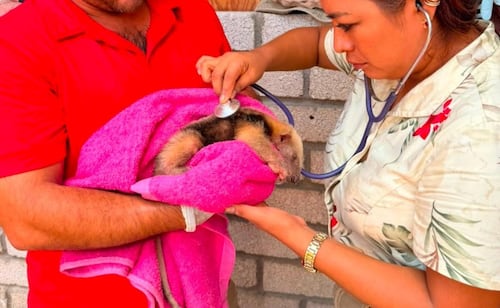
Baby anteater rescued on Oaxaca street; species endangered
Translated from Spanish, summarized and contextualized by DistantNews.
At a glance
News
Official statement
Outcome reported
- A baby anteater was rescued after being found alone on a street in Oaxaca, Mexico.
- The young male anteater, approximately two months old, was found in Barra de la Cruz.
- The anteater is listed as an endangered species in Mexico, and authorities are assessing its condition for potential release back into the wild.
A young giant anteater (Tamandua mexicana mexicana) was rescued after a child reported its solitary presence on the main street of Barra de la Cruz, a coastal town in Oaxaca, Mexico. The mother of the anteater was not sighted.
The National Commission of Áreas Naturales Protegidas (Conanp) informed that the cub was provided with timely assessment and care.
The National Commission of Natural Protected Areas (Conanp) provided care and assessment for the anteater, identified as a male approximately two months old, measuring 60 centimeters in length with a 27-centimeter tail and weighing 676 grams. The anteater was transported to a veterinary clinic in Salina Cruz for recovery and evaluation regarding its potential reintegration into the wild.
In Mexico, the giant anteater is listed as endangered under the NOM-059-SEMARNAT-2010 regulation. This protection aims to safeguard the species from habitat destruction and illegal trafficking. Conanp expressed gratitude for the voluntary surrender of the animal, highlighting it as a sign of public understanding regarding the prohibition of capturing, selling, or keeping endangered species as pets.
In Mexico, the oso hormiguero is listed in NOM-059-SEMARNAT-2010 as an endangered species.
Conanp emphasizes the vital ecological role of anteaters, particularly in low deciduous forests and coastal zones. As natural predators of ants and termites, they consume up to 9,000 insects daily, contributing to ecological balance, soil dynamics, and tree growth. Their presence also supports the nesting areas of sea turtles by controlling insect populations that prey on eggs and hatchlings.
The species plays a vital role in the low deciduous forest and coastal areas. By feeding on ants, it acts as a natural controller of populations, consuming up to 9,000 ants and termites daily.
DistantNews Editorial
Originally published by El Universal in Spanish. Translated, summarized, and contextualized by our editorial team with added local perspective. Read our editorial standards.
More Stories



From Our Blog

What Press Freedom Means for the News You Read

What Gets Lost (and Found) When News Is Translated

The Critical Role of Diaspora Media in Global News

What Travellers Should Know About Countries with Restricted Press

A Digital Nomad's Guide to Following Local News
