


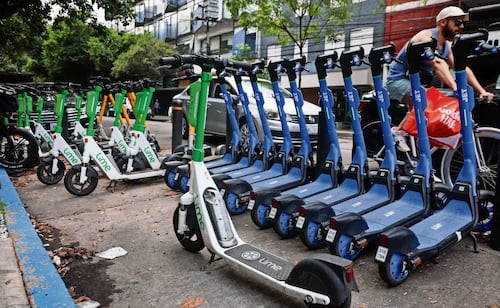
Mexico City Regulates Electric Scooters for Safety and Traffic Flow
Translated from Spanish, summarized and contextualized by DistantNews.
At a glance
News
Sources not specified
New plan
- Mexico City's mobility secretariat has regulated electric scooters to improve traffic and safety.
- Scooters are classified as VEMEPE (personal motorized electric vehicles) or VEP (personal electric vehicles), with different registration and speed requirements.
- Violators face fines ranging from 10 to 30 UMAs (approximately $1,173 to $3,519), with stricter rules for specific scooter types.
Mexico City is implementing new regulations for electric scooters to enhance urban mobility and ensure the safety of all road users. The Secretariat of Mobility (Semovi) has established rules for these increasingly popular eco-friendly transport options.
Electric scooters are now categorized into two types: VEMEPE (personal motorized electric vehicles) and VEP (personal electric vehicles). VEMEPEs, which meet specific criteria like a 25 km/h speed limit, 250W motor, and a weight over 35 kilograms, must be registered and equipped with license plates and a circulation card. The deadline for this registration is November 20.
VEPs, those with lower speed and weight, do not require plates but must be registered to receive a certificate and an Electric Mobility Emblem (DME). The city's Transit Regulations also prohibit scooters from using sidewalks, bike lanes, public transport-only lanes, and central lanes of controlled-access roads. Specific restrictions apply to different VEMEPE types based on their weight and the speed limits of the roads they use.
Scooter riders must also adhere to guidelines such as wearing a helmet, keeping lights on, respecting speed limits, and not riding under the influence. Depending on the scooter, riders may need a Type A1 or A2 license. Fines for non-compliance, starting September 1, will range from 10 to 30 Universal Minimum Wages (UMAs), translating to approximately $1,173 to $3,519.
DistantNews Editorial
Originally published by El Universal in Spanish. Translated, summarized, and contextualized by our editorial team with added local perspective. Read our editorial standards.
More Stories

From Our Blog

What Press Freedom Means for the News You Read

What Gets Lost (and Found) When News Is Translated

The Critical Role of Diaspora Media in Global News

What Travellers Should Know About Countries with Restricted Press

A Digital Nomad's Guide to Following Local News
