


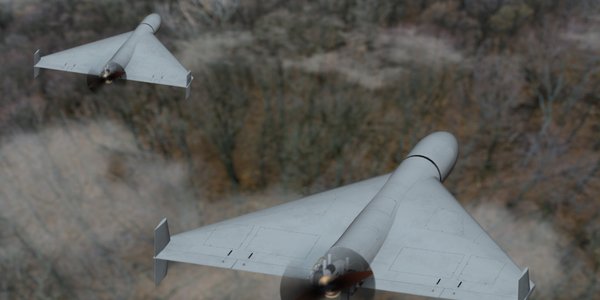
Baltic Sea Nations Unite Against Hybrid Threats
Translated from Polish and summarized by DistantNews. Read the original for the full story.
At a glance
News
Sources not specified
New plan
- Baltic Sea region interior ministers agreed in Flensburg, Germany, to form a task force against hybrid threats.
- The group will focus on rapid information exchange and coordinated actions, particularly against drone threats.
- The initiative aims to counter hybrid warfare tactics, with Germany and Poland highlighting concerns about Russian and Belarusian actions.
Interior ministers from Baltic Sea nations have agreed to form a dedicated task force to combat hybrid threats, a move announced at the Security of the Baltic Sea Summit in Flensburg, Germany. The group aims to enhance rapid information sharing and coordinate responses to escalating security challenges, with a particular focus on countering drone warfare and other hybrid tactics.
Germany cannot accept hybrid attacks without objection.
German Interior Minister Alexander Dobrindt stressed that Germany will not tolerate hybrid attacks without a response. He cited a recent drone incident at Leipzig airport in early August, suspected to be orchestrated by Russia, as a critical example. Dobrindt indicated that such incidents are not merely about disrupting operations but represent a more serious escalation, demanding consequences for perpetrators.
This is another element of unifying the efforts of the Baltic Sea states against hybrid threats from Russia and Belarus.
Poland's Deputy Interior Minister Maciej Duszczyk emphasized that the task force is another step in unifying Baltic Sea states against hybrid threats from Russia and Belarus. He noted concerns beyond oil transport, specifically mentioning "shadow fleet" vessels that may pose risks to critical infrastructure by suddenly losing maneuverability. Poland is developing a system to safeguard against such situations.
It is completely obvious that the intention was to cause damage of a different kind than merely disabling the airport for several hours.
The summit included ministers and deputy ministers from Poland, Germany, Denmark, Estonia, Finland, Latvia, the Netherlands, Norway, Sweden, and Ireland. Participants observed a German special forces demonstration, including drone interception and helicopter-to-ship troop deployment, underscoring the region's commitment to bolstering its defense capabilities against evolving threats.
The Leipzig incident changes the nature of the situation, and after the matter is clarified, it is necessary to draw consequences for the perpetrators.
About this summary
Originally published by Rzeczpospolita in Polish. Translated, summarized, and contextualized automatically by DistantNews, with a note on how the source frames the story. Not individually reviewed before publishing. How this works.
More Stories

From Our Blog

What Gets Lost (and Found) When News Is Translated

The Critical Role of Diaspora Media in Global News

What Travellers Should Know About Countries with Restricted Press

A Digital Nomad's Guide to Following Local News

How the Same Story Looks Different in Different Countries
