


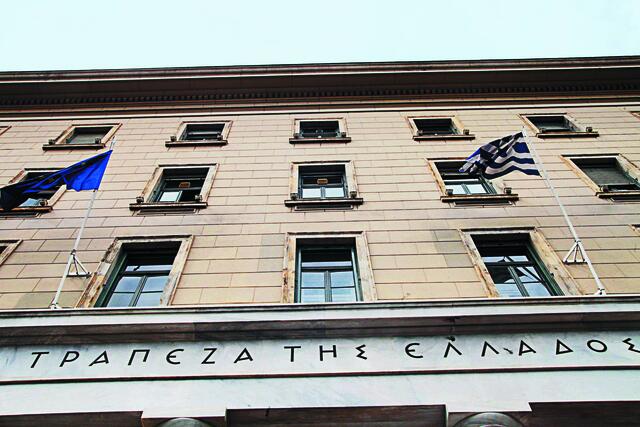
Bank of Greece: Risks to Financial System Remain Limited
Translated from Greek, summarized and contextualized by DistantNews.
At a glance
News
Official statement
Context piece
- The Bank of Greece assesses that risks to the country's financial system remain limited in the third quarter of 2026.
- The central bank will not change the countercyclical capital buffer rate for Greece, keeping it at 0.5%.
- While some sectors show early signs of risk accumulation, overall excessive credit expansion is absent.
Risks to Greece's financial system are contained in the third quarter of 2026, according to the Bank of Greece. The central bank's assessment indicates a neutral risk environment, leading it to maintain the countercyclical capital buffer rate for Greece at 0.5%. This rate, set to apply from October 1, 2026, reflects a cautious approach to managing systemic risks.
The Bank of Greece evaluates cyclical systemic risks by considering credit-to-GDP gaps, the capital buffer guide, and additional indicators of risk accumulation. While analysis points to the beginnings of risk buildup in areas like financing for non-financial corporations, housing prices, and the current account balance, it confirms the absence of excessive credit expansion.
Consequently, the Bank of Greece sees no need to alter the existing countercyclical capital buffer. This measure, adopted early in the economic cycle, aims to activate before risks become either subdued or elevated. For the period between October 1, 2025, and September 30, 2026, the required buffer for credit institutions remains at 0.25%.
DistantNews Editorial
Originally published by Ta Nea in Greek. Translated, summarized, and contextualized by our editorial team with added local perspective. Read our editorial standards.
More Stories



From Our Blog

What Gets Lost (and Found) When News Is Translated

The Critical Role of Diaspora Media in Global News

What Travellers Should Know About Countries with Restricted Press

A Digital Nomad's Guide to Following Local News

How the Same Story Looks Different in Different Countries
