

Bank Pekao joins European stablecoin project
Translated from Polish, summarized and contextualized by DistantNews.
At a glance
News
Official statement
Context piece
- Bank Pekao has joined the Qivalis consortium, a European project aiming to create a regulated, euro-denominated stablecoin.
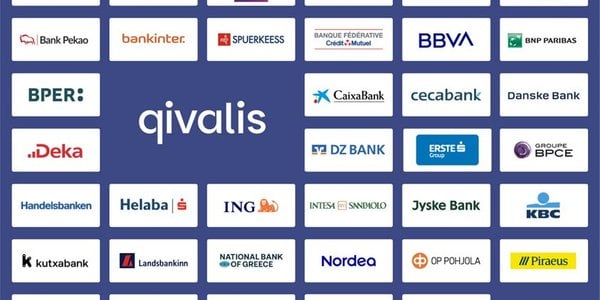
- The initiative involves 37 banks from 15 European countries and seeks to facilitate faster, cheaper cross-border payments using blockchain technology.
- The stablecoin, an Electronic Money Token (EMT), will be pegged 1:1 with the euro, offering real-time settlement and programmability, potentially transforming international transactions and the settlement of tokenized assets.
Bank Pekao S.A. is now part of a significant European initiative to build a new payment infrastructure based on blockchain technology. The bank has joined the Qivalis consortium, a group of 37 financial institutions from 15 European countries dedicated to creating a regulated, euro-denominated stablecoin.
The payments market is undergoing a dynamic transformation. The emergence of solutions like SEPA Instant (instant transfers within the European Union) and the Wero system (instant payments between bank accounts) shows that both the financial sector and users expect increasingly faster and more accessible ways to transfer funds.
The project focuses on developing an Electronic Money Token (EMT), a digital form of money directly linked to the euro at a 1:1 ratio. This means a token valued at one euro should be redeemable for one euro, distinguishing it from volatile speculative digital assets. The primary benefit for businesses and customers lies in enabling faster and more cost-effective cross-border payments, overcoming the limitations of traditional international transfers that can be slow and expensive, especially outside banking hours.
Antonina Karwasińska, Director of Operations and Development at Pekao's Brokerage Office, highlighted the dynamic transformation occurring in the payments market. She noted that advancements like SEPA Instant and the Wero system demonstrate a clear demand for quicker and more accessible fund transfer methods. Karwasińska explained that stablecoins align with these needs, offering not only speed but also global transaction capabilities and programmability. This programmability allows payments to be automatically linked to specific events, such as asset delivery or service completion.
Stablecoins fit these needs, but their advantage is not solely due to settlement speed. A key feature is the ability to handle transactions on a global scale, as well as programmability, which allows automatic linking of payments to specific events, delivery of an asset, or performance of a service. It is precisely the combination of programmability, settlement immediacy, and global reach that distinguishes stablecoins from other current payment innovations. Additionally, with the development of the tokenized securities market, stablecoins can serve as a digital equivalent of cash, used for transaction settlement. They fill a gap in the so-called cash leg, enabling efficient settlement of tokenized financial instruments on DLT infrastructure.
Łukasz Januszewski, Vice President of Bank Pekao S.A., emphasized the strategic importance of joining the Qivalis consortium. He stated that this move is a crucial step toward co-creating a modern European financial infrastructure powered by blockchain. Regulated stablecoins, he believes, have the potential to significantly streamline cross-border payments and settlements, making them faster, cheaper, and more accessible. Furthermore, as the market for tokenized securities grows, these stablecoins could serve as the digital equivalent of cash for transaction settlements, filling a critical gap in the settlement process for tokenized financial instruments on DLT infrastructure.
The joining of Bank Pekao S.A. to the Qivalis consortium is an important step towards co-creating a modern, European financial infrastructure based on blockchain technology. Regulated stablecoins can significantly improve cross-border payments and settlements, making them faster, cheaper, and more accessible.
DistantNews Editorial
Originally published by Rzeczpospolita in Polish. Translated, summarized, and contextualized by our editorial team with added local perspective. Read our editorial standards.
More Stories



From Our Blog

What Gets Lost (and Found) When News Is Translated

The Critical Role of Diaspora Media in Global News

What Travellers Should Know About Countries with Restricted Press

A Digital Nomad's Guide to Following Local News

How the Same Story Looks Different in Different Countries
