


Bappenas wants green jobs to lead Indonesia's future employment growth
Translated from Indonesian and summarized by DistantNews. Read the original for the full story.
At a glance
News
Named sources
New plan
- Bappenas chief Rachmat Pambudy said Indonesia should measure new jobs by their environmental impact as well as the number of workers employed.
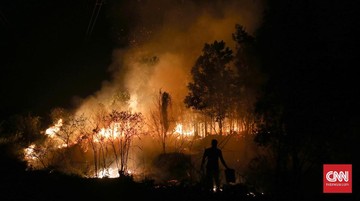
- He linked green jobs to efforts to limit climate-related risks, including forest fires, polar ice loss, rising seas and threats to coastal communities.
- Bappenas estimates Indonesia had about 4 million green workers in 2025 and projects more than 5.3 million by 2029 under a high-growth scenario.
Indonesia's development planning chief wants green jobs to become a leading source of employment, arguing that job creation can no longer be judged only by how many people find work. It must also account for the pressure those jobs place on the environment and the long-term sustainability of the planet.
"Why do I want green jobs to become the spearhead of employment in the future? If we continue using the old criteria, with jobs that are not green, the Earth will become hotter," Rachmat Pambudy said at the Indonesia's Green Jobs Conference 2026 in Jakarta.
Why do I want green jobs to become the spearhead of employment in the future? If we continue using the old criteria, with jobs that are not green, the Earth will become hotter.
Rachmat said rising global temperatures could bring heavier environmental consequences, including forest fires, melting ice at the North and South Poles, rising sea levels and greater risks for people living in coastal areas and on small islands. He presented green jobs not simply as a new labor-market category, but as a development tool that could protect natural resources without adding to environmental stress.
Green jobs do not only create new workers, but workers who are more environmentally friendly and who should receive higher rewards than other workers.
"Green jobs do not only create new workers, but workers who are more environmentally friendly and who should receive higher rewards than other workers," he said. Rachmat also called for an Indonesian definition of green jobs that reflects the country's economic structure, development needs and ecological conditions. "We should not let other countries dictate to us, and we should not be dictated to by other organizations' classifications, making it seem as though we are doing badly," he said.
Bappenas launched Indonesia's Green Workforce Development Roadmap in April 2025. The national guide covers eight priority sectors, from renewable energy to the circular economy, and maps the tasks, competencies and skills linked to environmental protection. Bappenas estimates that green workers made up about 2.7 percent of Indonesia's workforce in 2025. Under a high-growth scenario, that share could rise to about 3.14 percent, or more than 5.3 million workers, by 2029.
We should not let other countries dictate to us, and we should not be dictated to by other organizations' classifications, making it seem as though we are doing badly.
About this summary
Originally published by Republika in Indonesian. Translated, summarized, and contextualized automatically by DistantNews, with a note on how the source frames the story. Not individually reviewed before publishing. How this works.
More Stories

From Our Blog

What Gets Lost (and Found) When News Is Translated

The Critical Role of Diaspora Media in Global News

What Travellers Should Know About Countries with Restricted Press

A Digital Nomad's Guide to Following Local News

How the Same Story Looks Different in Different Countries
