


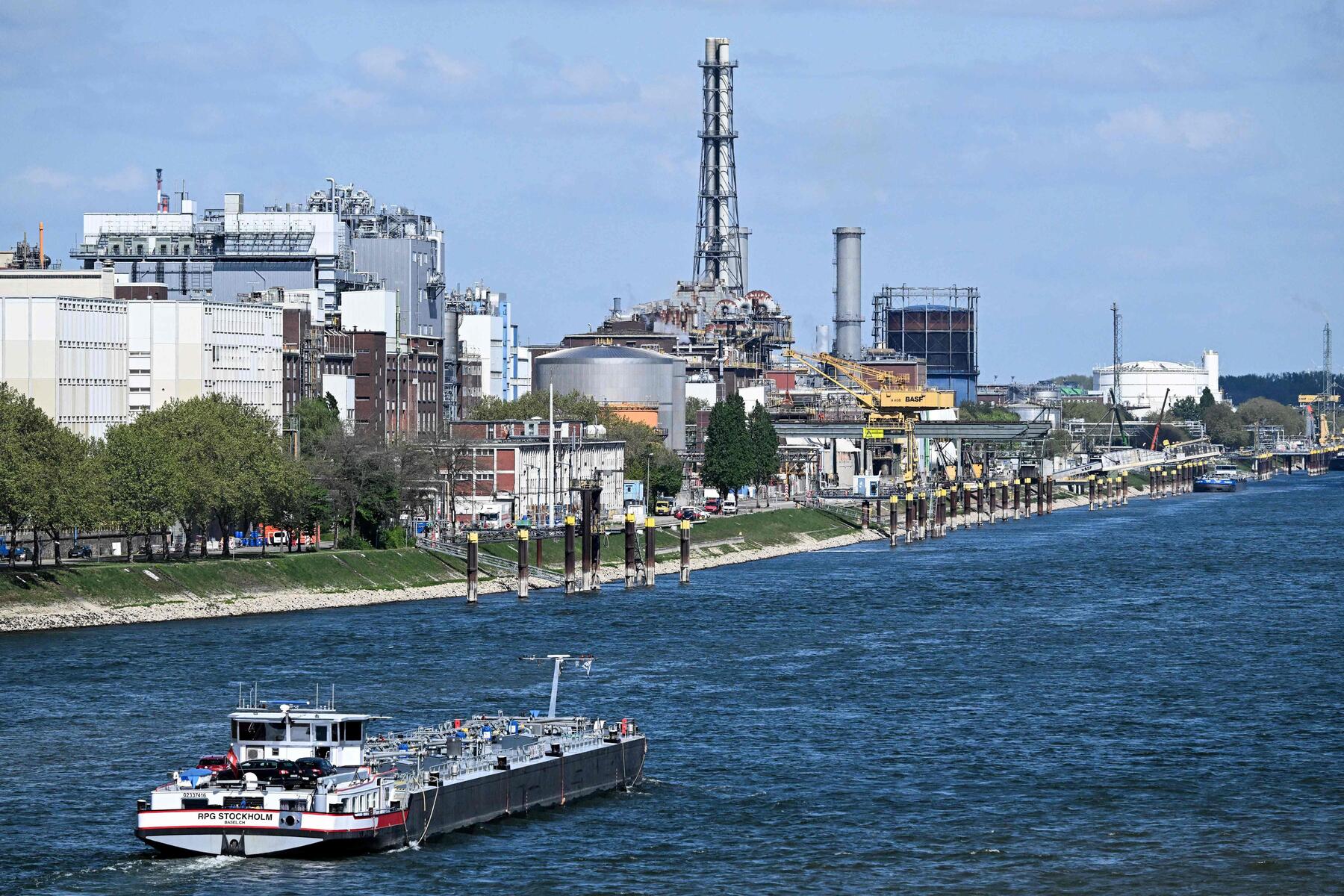
BASF slashes Ludwigshafen workforce to 70-year low amid industry crisis
Translated from German, summarized and contextualized by DistantNews.
At a glance
News
Named sources
Context piece
- Chemical giant BASF has reduced its workforce at its Ludwigshafen headquarters to the lowest level in 70 years, with under 30,000 full-time positions.
- The company is cutting 300 to 350 jobs monthly at the site as part of a strategy to become more competitive.
- This move is part of broader job cuts affecting around 7,000 positions globally since January 2024, with two-thirds in Germany.
BASF, the global chemical giant, is implementing significant workforce reductions at its main Ludwigshafen site, bringing the employee count to its lowest point in seven decades. The company has reduced the number of full-time positions to below 30,000 for the first time since 1954.
"We have increased the pace again to make our global organization leaner and more efficient," stated CEO Markus Kamieth. He explained that the Ludwigshafen plant is currently shedding 300 to 350 jobs per month. Kamieth described this reduction as "an important and necessary step to make the site competitive again."
We have increased the pace again to make our global organization leaner and more efficient.
These cuts are part of a larger restructuring effort. Since January 2024, BASF has eliminated approximately 7,000 jobs worldwide, with about two-thirds of those reductions occurring in Germany. Overall, the company's global workforce decreased by over 14 percent year-on-year to around 94,900 employees by the end of June.
The company's financial performance in the last quarter saw a boost from increased demand and strong price hikes, partly due to customers restocking amid concerns over supply chain disruptions from the blockade of the Strait of Hormuz. The ramp-up of its new integrated site in Zhanjiang, China, also contributed to significant volume growth. Despite low water levels in the Rhine River, a crucial transport route, Kamieth does not foresee major financial risks, citing improved preparedness for weather extremes compared to 2018. However, he did not rule out potential supply shortages for certain products in the coming weeks.
This reduction is an important and necessary step to make the site competitive again.
BASF recently revised its annual targets upward after releasing surprisingly strong preliminary quarterly results in mid-July. The company now anticipates adjusted operating earnings (EBITDA) between 6.9 and 7.7 billion euros for 2026, an increase from the previous forecast of 6.2 to 7.0 billion euros. A new share buyback program of up to one billion euros, running until April 2027, was also announced. BASF shares rose 3.7 percent following the news.
The aggressive cost-cutting measures are a response to the deep crisis gripping the European chemical industry, characterized by weak demand and high energy prices. Competitors like Evonik, Wacker, and Lanxess have also announced significant job cuts. Kamieth had previously raised the target for annual savings to 2.3 billion euros at the beginning of the year. The Ludwigshafen site, in particular, has been under pressure, reporting losses for the fourth consecutive year. CFO Dirk Elvermann acknowledged that the site's profitability has not yet been fully restored, stating, "As of today, we cannot yet report: Ludwigshafen is now profitable again."
As of today, we cannot yet report: Ludwigshafen is now profitable again.
DistantNews Editorial
Originally published by Die Presse in German. Translated, summarized, and contextualized by our editorial team with added local perspective. Read our editorial standards.
More Stories



From Our Blog

What Gets Lost (and Found) When News Is Translated

The Critical Role of Diaspora Media in Global News

What Travellers Should Know About Countries with Restricted Press

A Digital Nomad's Guide to Following Local News

How the Same Story Looks Different in Different Countries
