


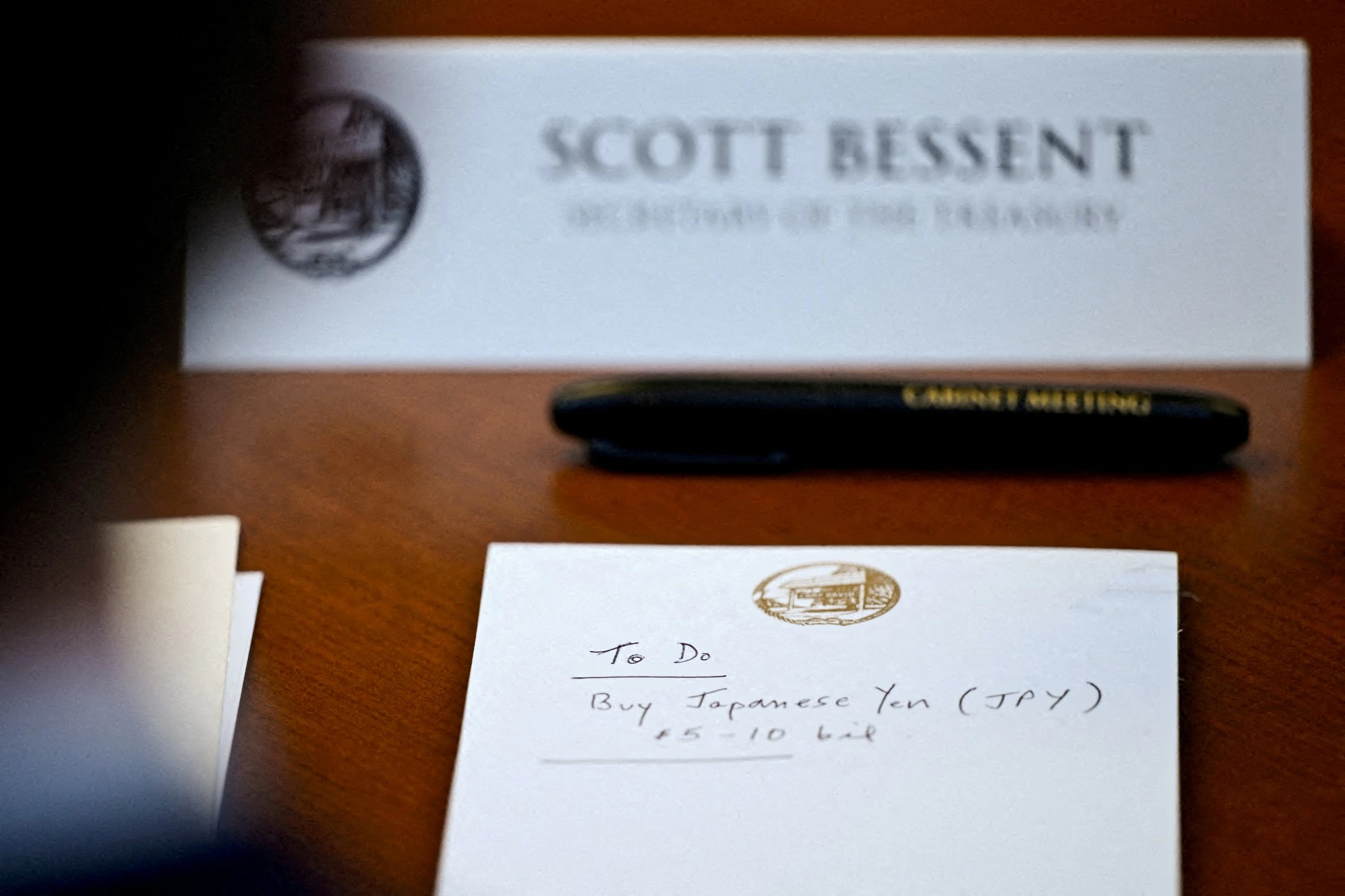
Bessent’s defence of the yen is a risky innovation
Summarized and contextualized by DistantNews.
At a glance
Analysis
From a news agency
Context piece
- U.S. Treasury Secretary Scott Bessent's joint intervention to support the yen with Japan is a novel approach not seen in decades.
- The intervention aims to stabilize currency markets and ease inflationary pressure without raising U.S. borrowing costs.
- However, currency intervention is often a temporary fix and carries risks of backfiring or weakening confidence in broader economic policy.
U.S. Treasury Secretary Scott Bessent's decision to jointly intervene in currency markets to support the Japanese yen marks a significant departure from recent decades, surprising investors and prompting debate about its efficacy and risks.
The policy's rationale centers on mutual benefit for the U.S. and Japan. A depreciating yen has exacerbated inflation concerns in Japan. By supporting the yen, the U.S. and Japan aim to stabilize currency markets and alleviate price pressures. Crucially, Bessent seeks to achieve this without the traditional method of Japan selling U.S. Treasuries, which would increase borrowing costs for Americans and potentially push dollar interest rates higher.
Instead, the U.S. utilized euros from its Exchange Stabilization Fund to buy yen, mitigating the risk of upward pressure on Treasury yields and a weaker dollar. This innovative approach, reminiscent of Bessent's past success in supporting Argentina's peso, also benefits from investor surprise, initially arresting the yen's decline and even prompting a temporary rebound.
Despite the initial success, currency intervention is widely viewed as a short-term solution. Sustaining such efforts can become complex and costly, especially if investors become skeptical. Furthermore, the policy risks undermining confidence in broader economic strategies, potentially leading to higher long-term borrowing costs. Bessent's own past success in profiting from shorting sterling, despite U.K. intervention efforts, serves as a stark reminder of these potential pitfalls.
Looking ahead, Bessent plans to expand the Federal Reserve's Foreign and International Monetary Authorities Repo Facility to provide more dollars for Japan's yen purchases. While the Fed is expected to follow the Treasury's lead on exchange-rate policy, utilizing the FIMA facility could blur the lines between monetary and fiscal policy. This is a particularly sensitive issue given current investor concerns about the Fed's independence from the White House on monetary policy matters.
DistantNews Editorial
Originally published by Gulf Today. Summarized and contextualized by our editorial team with added local perspective. Read our editorial standards.
More Stories



From Our Blog

What Gets Lost (and Found) When News Is Translated

The Critical Role of Diaspora Media in Global News

What Travellers Should Know About Countries with Restricted Press

A Digital Nomad's Guide to Following Local News

How the Same Story Looks Different in Different Countries
