


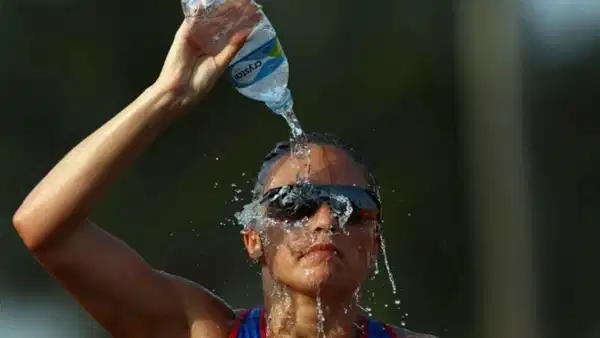
Beware of these when exercising in extreme heat: Incorrect cooling methods pose risks
Translated from Turkish, summarized and contextualized by DistantNews.
At a glance
News
Sources not specified
Context piece
- Record heat expected this summer due to a strong El Niño may make exercising more difficult and increase risks like heatstroke.
- Researchers suggest that reduced physical activity due to rising temperatures could lead to hundreds of thousands of premature deaths annually by 2050.
- Experts recommend exercising earlier in the day, in shaded areas, managing humidity, and adjusting exercise duration or intensity to stay active safely in hot weather.
Record heat expected this summer due to a strong El Niño could make exercising more challenging and increase risks such as heatstroke. Football players in the 2026 World Cup matches across the US, Canada, and Mexico have already experienced controversial extra water breaks every 22 minutes of each half.
Christian García-Witulski, an environmental lifestyle epidemiologist at the Pontifical Catholic University of Argentina, notes that even daily routines like walking or cycling become physically harder and more uncomfortable in high temperatures. He warns that reducing physical activity when it's hot could increase long-term health risks. A recent study by García-Witulski and colleagues suggests that rising temperatures due to climate change could lead to an additional 470,000 to 700,000 premature deaths per year by 2050 if people become less active.
To stay active while managing the heat, experts suggest several strategies. Ollie Jay, director of the Heat and Health Research Centre at the University of Sydney, recommends exercising during cooler morning or evening hours, or in shaded areas, which can feel 12 to 15 degrees Celsius cooler than direct sunlight. Managing humidity is also crucial, as it affects the body's ability to cool down through sweat evaporation. Low wind speed in enclosed spaces can also increase heat-related stress.
When avoiding the heat is not possible, García-Witulski advises shortening exercise duration and taking more frequent breaks. He suggests that a short morning walk or a light indoor workout might be safer and more realistic than stubbornly sticking to a routine. Hotter conditions create a greater heat load on the body, leading to faster fatigue, increased sweating, dizziness, and discomfort, often resulting in poorer sleep.
DistantNews Editorial
Originally published by Cumhuriyet in Turkish. Translated, summarized, and contextualized by our editorial team with added local perspective. Read our editorial standards.
More Stories


From Our Blog

What Gets Lost (and Found) When News Is Translated

The Critical Role of Diaspora Media in Global News

What Travellers Should Know About Countries with Restricted Press

A Digital Nomad's Guide to Following Local News

How the Same Story Looks Different in Different Countries
