


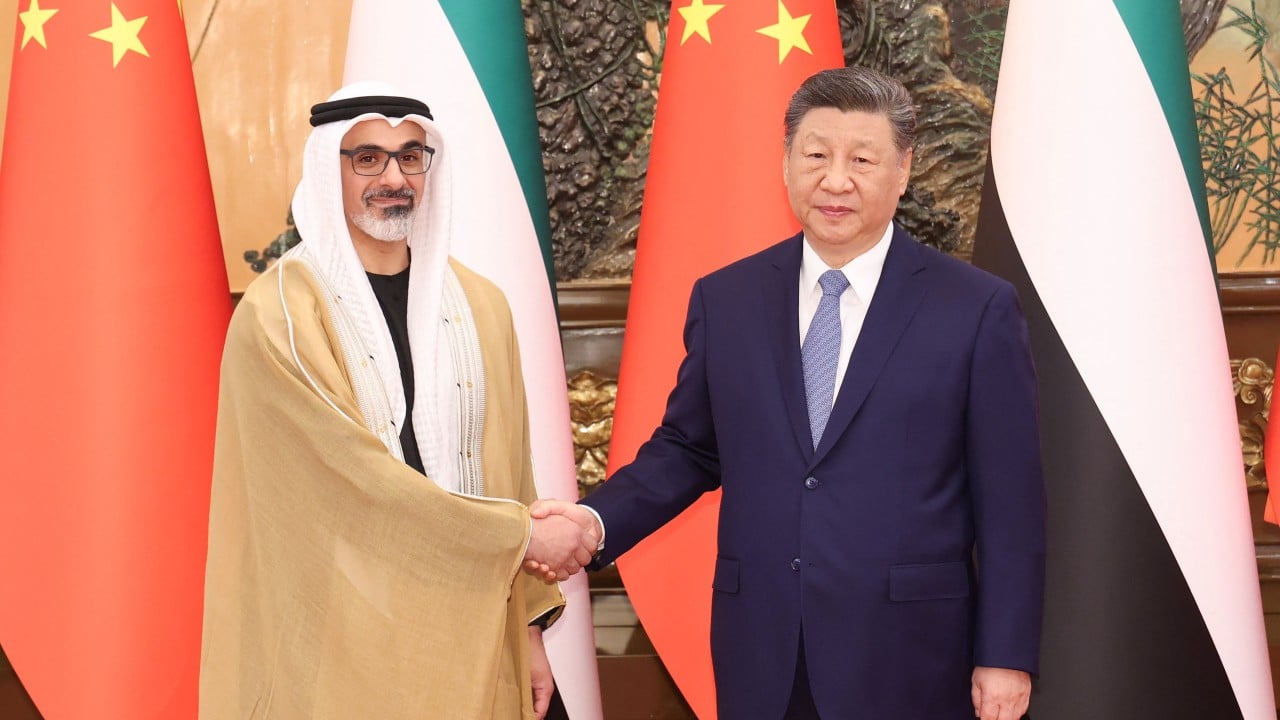
Beyond 'Petroyuan': A subtler shift is underway for the US dollar
Translated from English, summarized and contextualized by DistantNews.
TLDR
- Developments including the UAE Crown Prince's visit to Beijing and reports of yuan use in Strait of Hormuz payments raise questions about a potential 'petroyuan' system.
- Despite these shifts, the US dollar remains dominant in global reserves and international payments due to its structural advantages and the security bargain linking oil to US military power.
- The article questions whether the traditional petrodollar system, underpinned by US security guarantees, is becoming less solid amidst regional conflicts and evolving geopolitical alignments.
As the South China Morning Post, we analyze the subtle yet significant shifts occurring in the global financial landscape, particularly concerning the US dollar's dominance. While the term 'petroyuan' might be premature, the convergence of recent events—from the UAE Crown Prince's visit to Beijing to discussions around yuan-denominated oil payments—suggests a more complex evolution than a simple currency order.
The petrodollar has never been just the invoice currency of oil cargoes. It is a system linking energy pricing, cross-border finance, reserve accumulation and security.
Our analysis highlights that the petrodollar system is more than just an invoicing mechanism; it's an intricate web connecting energy pricing, international finance, reserve accumulation, and crucially, a security bargain underwritten by American military power. This strategic depth has long bolstered the dollar's position. However, the article rightly points out that this security bargain is showing signs of strain, prompting a re-evaluation of the dollar's entrenched advantages.
That arrangement gave the dollar strategic depth. It tied the world’s most important commodity to the world’s most important reserve currency and then wrapped both inside a security bargain.
From our perspective in Hong Kong, understanding these dynamics is crucial. While the dollar's deep liquidity and status as a safe asset remain powerful, the increasing use of alternative currencies in key trade routes like the Strait of Hormuz cannot be ignored. This isn't just about economics; it's about the geopolitical underpinnings of global trade and finance. The article's cautious approach, acknowledging the dollar's strengths while exploring emerging trends, reflects a nuanced understanding vital for navigating the complexities of international markets.
That bargain is no longer as solid as it once looked.
DistantNews Editorial
Originally published by South China Morning Post in English. Translated, summarized, and contextualized by our editorial team with added local perspective. Read our editorial standards.
More Stories

From Our Blog

Countries Without a Free Press: What You Need to Know

What Press Freedom Means for the News You Read

What Gets Lost (and Found) When News Is Translated

The Critical Role of Diaspora Media in Global News

What Travellers Should Know About Countries with Restricted Press
