

Bill to Extend Judges' Retirement Age Submitted to Parliament
Translated from Sinhala, summarized and contextualized by DistantNews.
At a glance
News
Named sources
New plan
- A bill to extend the retirement age for judges in higher courts will be presented to Sri Lanka's parliament on August 18.
- The proposed amendment aims to increase the retirement age for Supreme Court judges from 65 to 67 and for Court of Appeal judges from 63 to 65.
- The bill faces strong opposition from various legal bodies, political parties, and international organizations.
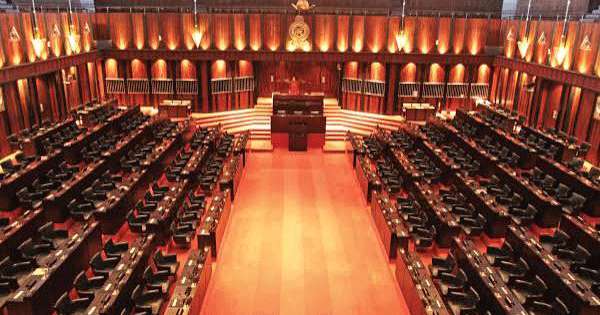
A constitutional amendment bill to raise the retirement age for judges in Sri Lanka's higher courts is scheduled for presentation to parliament on August 18. Minister of Justice, Harkan Nanayakkara, stated that this bill is a positive step towards rectifying deficiencies in the judicial sector and enhancing its efficiency.
If passed, the 12th amendment to the constitution will extend the retirement age for Supreme Court judges from 65 to 67 years, and for Court of Appeal judges from 63 to 65 years. The gazette notification for the 22nd constitutional amendment was recently released, paving the way for this new proposal.
However, the proposed legislation has encountered significant opposition. The Judicial Services Association, the Bar Association of Sri Lanka, many opposition political parties, the United Nations, and other international organizations have expressed strong disapproval. It is anticipated that the Bar Association of Sri Lanka and various civil society organizations will file the maximum number of petitions against this bill in the Supreme Court.
Under Article 121 of the constitution, a bill presented to parliament has a 14-day window for legal challenges in the Supreme Court. The court must then deliver its decision to parliament within three to 21 days after hearing the petition.
This bill is a positive step in the government's program to correct deficiencies in the judicial field and make it an efficient place.
DistantNews Editorial
Originally published by Lankadeepa in Sinhala. Translated, summarized, and contextualized by our editorial team with added local perspective. Read our editorial standards.
More Stories


From Our Blog

What Gets Lost (and Found) When News Is Translated

The Critical Role of Diaspora Media in Global News

What Travellers Should Know About Countries with Restricted Press

A Digital Nomad's Guide to Following Local News

How the Same Story Looks Different in Different Countries
