


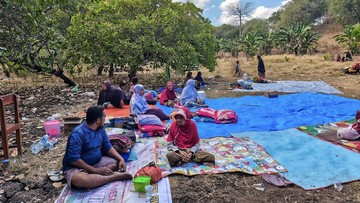
BNPB Data: 995 Aftershocks in NTT, 46 Felt by Residents
Translated from Indonesian, summarized and contextualized by DistantNews.
At a glance
News
Named sources
Ongoing story
- A powerful magnitude 7.7 earthquake struck Nusa Tenggara Timur (NTT), Indonesia, on Saturday, followed by 995 aftershocks recorded by August 16.
- Of the aftershocks, only 46 were felt by residents, according to the National Disaster Management Agency (BNPB).
- The earthquake has resulted in 53 deaths and 135 injuries, with rescue and recovery efforts ongoing.
Nusa Tenggara Timur (NTT) in Indonesia has experienced a significant seismic event, with 995 aftershocks recorded following a magnitude 7.7 earthquake on Saturday, August 15. The National Disaster Management Agency (BNPB) reported that by Sunday afternoon, August 16, the number of tremors had reached nearly a thousand.
Abdul Muhari, Deputy for Prevention at BNPB, explained that while the total number of aftershocks is high, only 46 were actually felt by the local population. He noted that these aftershocks are a natural phenomenon necessary for the earth's fault lines to stabilize after the main quake. The agency anticipates that the energy release will eventually subside, reducing the intensity and frequency of felt tremors.
From BMKG, for aftershocks until August 16 at 3:00 PM WIB, the total number of aftershocks was 995.
Tragically, the earthquake has claimed 53 lives across various regencies in NTT, including Manggarai Barat, Manggarai Timur, Manggarai, Nagekeo, Sikka, and Ende. Additionally, 135 people are currently receiving medical treatment for injuries, ranging from severe to minor, in local health facilities.
Rescue and aid efforts are underway as authorities assess the full extent of the damage and work to support affected communities. The BNPB continues to monitor the seismic activity and provide updates on the situation.
What we need to understand is that these aftershocks are needed by the structure of the fault that experienced the earthquake to become stable again. So this is a natural phenomenon that we must go through, and we hope that the released energy can subside quickly so that the aftershocks are no longer significant and are no longer felt by the community.
DistantNews Editorial
Originally published by CNN Indonesia in Indonesian. Translated, summarized, and contextualized by our editorial team with added local perspective. Read our editorial standards.
More Stories



From Our Blog

What Gets Lost (and Found) When News Is Translated

The Critical Role of Diaspora Media in Global News

What Travellers Should Know About Countries with Restricted Press

A Digital Nomad's Guide to Following Local News

How the Same Story Looks Different in Different Countries
