


BNR Advisor Accuses PSD of 'Fiscal Cynicism,' Governing Only in Good Times
Translated from Romanian, summarized and contextualized by DistantNews.
At a glance
Analysis
Named sources
Context piece
- Economist Lucian Croitoru criticizes the Social Democratic Party (PSD) for practicing "fiscal cynicism" by governing only during good economic times.
- Croitoru argues this strategy has allowed PSD to maintain dominance while other parties that governed during crises have eroded electorally.
- He suggests this pattern has contributed to the rise of parties like AUR and that the public perceives parties governing in good times as 'good' and those in bad times as 'bad'.
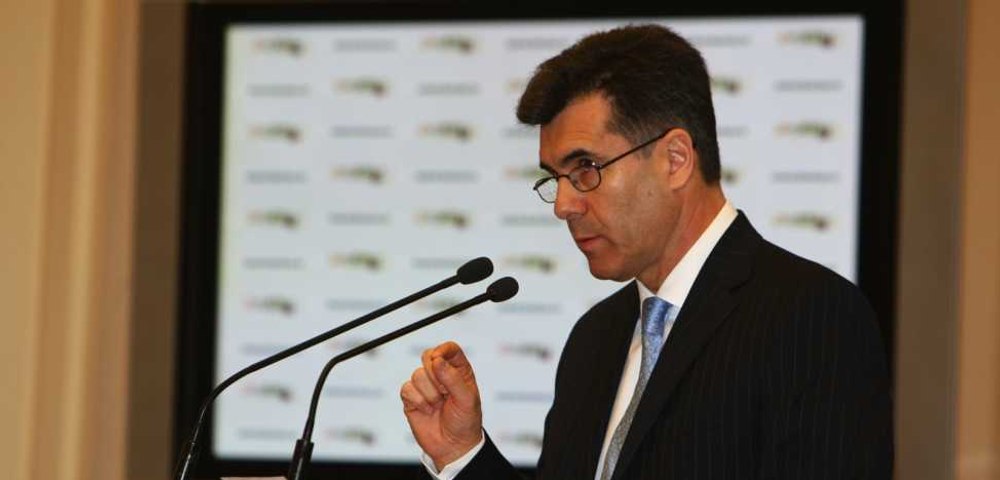
Bucharest – Economist Lucian Croitoru, an advisor to the National Bank of Romania (BNR) governor, has leveled sharp criticism against the Social Democratic Party (PSD), accusing it of a long-standing, undeclared strategy of "fiscal cynicism." In an analysis published by Știrile ProTV, Croitoru contends that PSD has consistently governed only during favorable economic periods, implementing pro-cyclical fiscal policies. This approach, he argues, has allowed the party to weaken its opponents and maintain a dominant position over three decades.
Croitoru's analysis, titled "The Two Faces of a Political Body," posits that PSD's strategy involves profiting from economic upturns while transferring responsibility for difficult periods to other political parties. He points to the historical pattern where parties like the National Peasants' Party (PNȚCD) and the Democratic Liberal Party (PDL), which governed during economic downturns or crises, subsequently faced significant electoral erosion or disappeared from the political scene. Even the National Liberal Party (PNL), which took power during the COVID-19 pandemic in 2020, risked a similar fate, according to Croitoru.
Există un partid care și-a asumat să guverneze, direct sau prin interpuși, numai în perioadele bune, promovând politici fiscale prociclice. Scopul: slăbirea adversarilor și menținerea poziției dominante pe termen lung
The economist highlights that PSD lost power in 2019 following the European Commission's excessive deficit procedure, triggered by policies enacted between 2016 and 2019. He suggests that the parties governing during recessions, such as PNȚCD and PDL, became "victims" of these difficult economic circumstances. While PNL managed to avoid complete disappearance, Croitoru implies it was partly due to the changing economic landscape and perhaps a shift in public perception.
Croitoru extends his analysis to the current political climate, introducing the concept of a "political body", referring to structures and mentalities inherited from the pre-1989 communist era. He suggests that PSD and the Alliance for the Union of Romanians (AUR) share certain traits derived from this common political heritage, even if they manifest differently. Croitoru concludes that the public has come to associate parties governing in good times with positive attributes, while those governing during hardship are perceived negatively, a dynamic he believes "fiscal cynicism" perpetuates.
Partidul care guvernează în perioadele bune este PSD, iar partidele care au guvernat în perioadele proaste au fost PNȚCD și PDL, care au ieșit de pe scena politică
DistantNews Editorial
Originally published by Adevărul in Romanian. Translated, summarized, and contextualized by our editorial team with added local perspective. Read our editorial standards.
More Stories


From Our Blog

What Gets Lost (and Found) When News Is Translated

The Critical Role of Diaspora Media in Global News

What Travellers Should Know About Countries with Restricted Press

A Digital Nomad's Guide to Following Local News

How the Same Story Looks Different in Different Countries
