

"Borgia. Anniversary Edition": Shameless Rome
Translated from Polish, summarized and contextualized by DistantNews.
At a glance
News
Sources not specified
Context piece
- The comic "Borgia. Anniversary Edition" is described as beautiful, lavish, and shameless, making it intriguingly fascinating.
- It is presented not as a history lesson but as an "opera of sin," reinterpreting the Borgia family's history into a brutal spectacle of power's birth.
- The comic portrays 1492 Rome as a city of lust, corruption, and fear, with Rodrigo Borgia's rise to the papacy depicted with gangster-like determination.
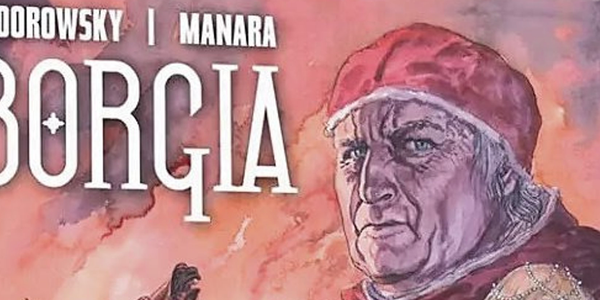
The comic "Borgia. Anniversary Edition" is lauded as a visually stunning and unashamedly bold work, rendering it "troublingly fascinating." This publication transcends a mere historical account, instead offering what the review calls an "opera of sin."
This comic is beautiful, lavish, shameless – and precisely because of that, troublingly fascinating.
Writer Alejandro Jodorowsky reimagines the saga of the Borgia family, a name synonymous with ecclesiastical decadence, transforming their story into a brutal spectacle. The narrative focuses on the birth of modern power, characterized by cynicism, familial ambition, and a mafia-like approach.
The depiction of Rome in 1492 deviates sharply from its image as the center of the Christian world. Jodorowsky's Rome is a city consumed by lust, corruption, and pervasive fear. Within this arena, Rodrigo Borgia's ascent to the papal tiara is portrayed with the ruthless determination of a gangster, underpinned by a chilling pragmatism.
"Borgia" is not a history lesson, but an opera of sin.
Rodrigo Borgia is presented as someone who has long abandoned faith in God but possesses a keen understanding of the symbolic power of religion. The artwork by Milo Manara complements this vision, contributing to the comic's "beautiful, lavish, shameless" aesthetic. The review suggests that it is precisely this audacity that makes the comic so compelling.
Rome in 1492 does not resemble the center of the Christian world here. It is a city of lust, corruption, and fear, an arena where Rodrigo Borgia climbs to the papal tiara with the determination of a gangster and the calm of a man who long ago stopped believing in God but perfectly understands the value of religious symbols.
DistantNews Editorial
Originally published by Rzeczpospolita in Polish. Translated, summarized, and contextualized by our editorial team with added local perspective. Read our editorial standards.
More Stories

From Our Blog

What Gets Lost (and Found) When News Is Translated

The Critical Role of Diaspora Media in Global News

What Travellers Should Know About Countries with Restricted Press

A Digital Nomad's Guide to Following Local News

How the Same Story Looks Different in Different Countries
