


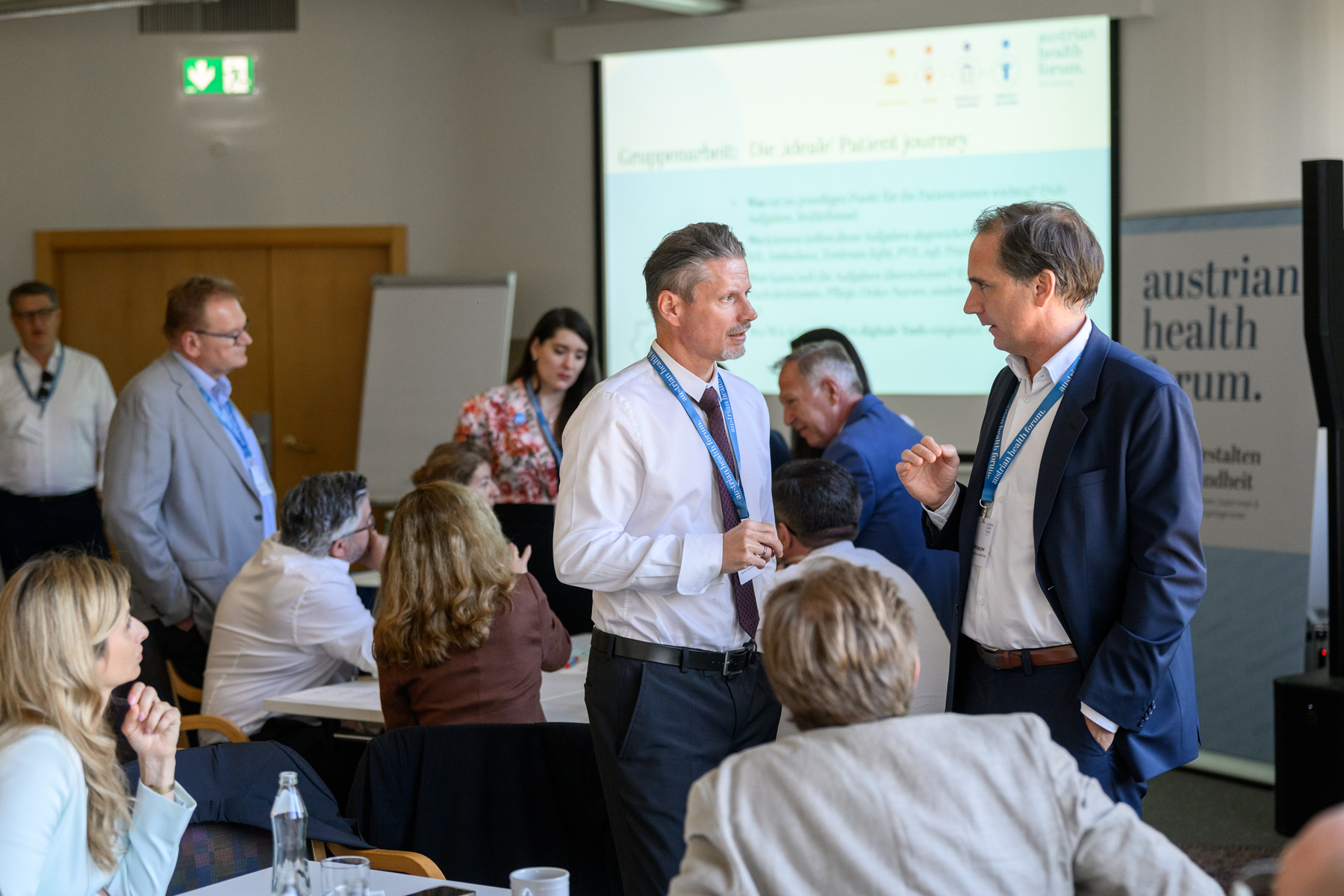
Brainstorming for a Healthy Austria: AI and Solidarity in Health Reform
Translated from German, summarized and contextualized by DistantNews.
At a glance
News
Sources not specified
Context piece
- A health reform discussion in Austria focused on efficiency and solidarity, exploring solutions through workshops.
- Key topics included AI's role, mental health, life sciences strategy, diagnosis coding, and oncology care.
- The potential of Agentic AI in healthcare was highlighted, emphasizing its autonomy and ability to learn, while stressing the need for human intelligence and adaptability.
A significant discussion on structural health reform in Austria, held at AHF-Schladming 2026, centered on the core principles of efficiency and solidarity. The event featured expert dialogues, panel discussions, and large group formats, with a particular focus on five intensive workshops addressing critical health topics.
The workshops delved into crucial areas such as the integration of AI and Agentic AI in healthcare, the impact of loneliness as a risk factor for mental health, developing a life sciences strategy for Austria, enhancing diagnosis coding for both physicians and patients, and improving cross-border cooperation in oncological care. The discussions aimed to generate concrete solutions for the future of Austria's healthcare system.
Agentic AI changes organizations towards more dynamic models; teams will focus more on goals than departments in the future. The competency profile of employees changes with the use of autonomous AI agents. Those who want to be successful in the future must not only prompt but also think in AI models and critically evaluate results.
Experts highlighted the transformative potential of Agentic AI, a more advanced form of AI characterized by autonomy and goal-oriented action, which is expected to revolutionize medical practice. Hubert Wackerle, CEO of IT-Services der Sozialversicherung GmbH, noted that Agentic AI will shift organizations towards more dynamic, goal-oriented models, necessitating a change in employee skill sets. He emphasized that success will require not only prompting AI but also thinking in AI models and critically evaluating results, integrating this with human intelligence, judgment, empathy, and responsibility. The conversation underscored the urgency of adapting to these technological shifts, with Wackerle stating, "The question is no longer whether AI will change the world of work, but how quickly we humans will be able to adapt to it."
The question is no longer whether AI will change the world of work, but how quickly we humans will be able to adapt to it.
DistantNews Editorial
Originally published by Die Presse in German. Translated, summarized, and contextualized by our editorial team with added local perspective. Read our editorial standards.
More Stories



From Our Blog

What Gets Lost (and Found) When News Is Translated

The Critical Role of Diaspora Media in Global News

What Travellers Should Know About Countries with Restricted Press

A Digital Nomad's Guide to Following Local News

How the Same Story Looks Different in Different Countries
