


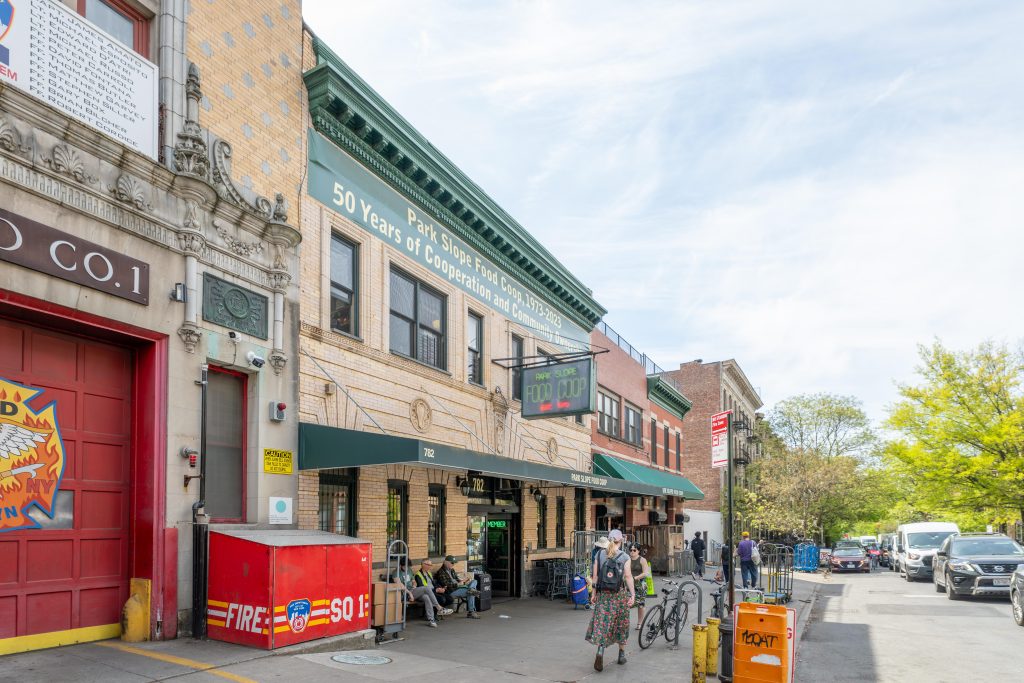
Brooklyn's Park Slope Coop Votes to Boycott Israeli Products, Rattling Exporters
Translated from French, summarized and contextualized by DistantNews.
At a glance
News
Sources not specified
Context piece
- The Park Slope Food Coop in Brooklyn voted to boycott Israeli products, with 67% of members supporting the measure.
- The decision follows a multi-year debate within the cooperative and community.
- The boycott impacts Israeli brands like ECO LOVE, with the owner expressing shock and concern about potential repercussions.
Brooklyn's Park Slope Food Coop has voted to boycott products made in Israel, a decision that reverberated beyond the shelves of the community grocery store, sending a warning signal to Israeli businesses operating in the American market. The historic virtual assembly saw nearly 7,000 members participate, with 67% voting in favor of the boycott.
The vote concluded a contentious, years-long debate among the cooperative's members and the wider Park Slope community. Out of 6,772 votes cast, 67% supported the boycott, 31% opposed it, and 2% abstained. The cooperative, founded in 1973, has a history of boycotting products from regimes like apartheid South Africa and Chile. Calls for boycotting Israeli goods had been present since 2009, gaining momentum after the war in Gaza began in 2023.
A key step in the process was a resolution to lower the threshold for adopting a boycott from a 75% supermajority to a simple 51% majority, which passed with 68% support. The final resolution states the cooperative will not sell products made in Israel or its occupied Palestinian territories "until Israel complies with international law, notably by ceasing its illegal discriminatory practices against Palestinians."
For Israeli brands like ECO LOVE, a maker of organic cosmetics, the impact is already being felt. Sharona Romano-Lazar, the company's owner, described being in "total shock" and indignation. She revealed that a New York department store had frozen its purchases of ECO LOVE products through its distributor, significantly reducing the brand's presence in the U.S. market. Romano-Lazar warned that the boycott's spread to other retailers could create a "chain reaction" that would place her company in a "very difficult situation."
DistantNews Editorial
Originally published by El Watan in French. Translated, summarized, and contextualized by our editorial team with added local perspective. Read our editorial standards.
More Stories


From Our Blog

What Gets Lost (and Found) When News Is Translated

The Critical Role of Diaspora Media in Global News

What Travellers Should Know About Countries with Restricted Press

A Digital Nomad's Guide to Following Local News

How the Same Story Looks Different in Different Countries
