

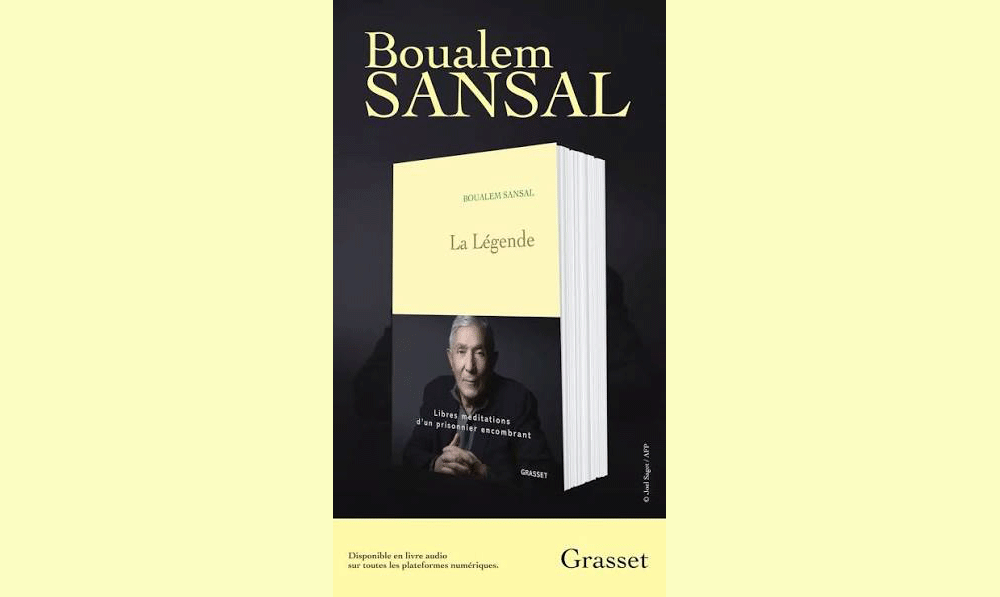

Boualem Sansal's "La Légende": A Writer's Imprisonment and Ideological Shift
Translated from French, summarized and contextualized by DistantNews.
At a glance
In-depth
Sources not specified
Outcome reported
- Boualem Sansal's new book, "La Légende," details his 361-day imprisonment in Algeria from November 2024 to November 2025.
- The memoir describes his confinement and transformation into a political symbol, criticizing President Tebboune and comparing himself to Solzhenitsyn, Dreyfus, and Navalny.
- The book, published by Grasset, is framed by the article as a literary act of resistance but also as the latest step in the writer's ideological shift toward the French radical right.
Boualem Sansal's "La Légende," published June 2, 2026, recounts his 361-day detention in Algeria, from November 16, 2024, to November 12, 2025. The book is presented as a literary act of resistance, detailing his year behind bars.
My story allows me to reclaim the legend, and recalls what an ordered justice is, a power without counterbalance, fear when it settles into language. These pages do not soften anything: they illuminate.
Sansal describes his transformation into a political symbol, openly criticizing President Abdelmadjid Tebboune. He recounts being reduced to inmate number 46611 in a cramped cell and stripped of his name and story. During his confinement, which included treatment for cancer in a hospital room, Sansal linked his fate to figures like Solzhenitsyn, Dreyfus, and Navalny. He even expressed a hope for a "Zola" to emerge and expose his judges, mirroring the Dreyfus affair.
The article frames the book as the culmination of Sansal's ideological drift, positioning him as a figurehead for the French radical right, a supporter of Israel, and a critic of independent Algeria. While Sansal's release was attributed to his international support committee, the book portrays this committee with almost messianic fervor, suggesting it functions frictionally across borders and ultimately unleashes lyrical praise from the author.
I am Solzhenitsyn. I am Dreyfus, I am Navalny.
"My story allows me to reclaim the legend, and recalls what an ordered justice is, a power without counterbalance, fear when it settles into language," Sansal writes in the book. "These pages do not soften anything: they illuminate."
The word 'legend' came naturally,
DistantNews Editorial
Originally published by El Watan in French. Translated, summarized, and contextualized by our editorial team with added local perspective. Read our editorial standards.
More Stories


From Our Blog

What Gets Lost (and Found) When News Is Translated

The Critical Role of Diaspora Media in Global News

What Travellers Should Know About Countries with Restricted Press

A Digital Nomad's Guide to Following Local News

How the Same Story Looks Different in Different Countries
