


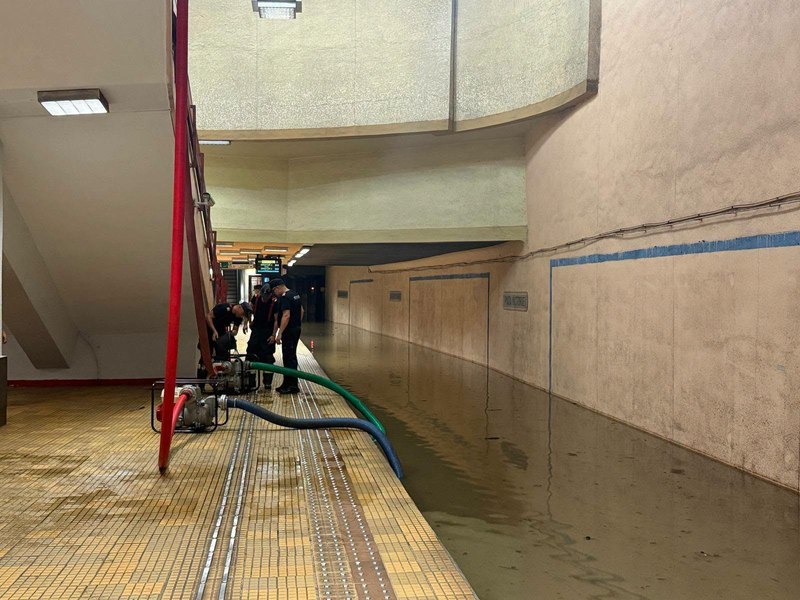
Bucharest Plans Retention Basins to Combat Flooding After Torrential Rains
Translated from Romanian, summarized and contextualized by DistantNews.
At a glance
News
Named sources
New plan
- Bucharest's mayor acknowledges the city's current sewage system cannot handle heavy rainfall, citing recent storms that dumped nearly 70 liters per square meter.
- Plans include building large retention basins under parks like Izvor and Opera to manage flood risks and store water for dry periods.
- The city aims to redirect rainwater to the Dâmbovița River instead of overwhelming the sewage system, with feasibility studies underway for multiple projects.
Bucharest must shift from 'lamentations to solutions' regarding extreme weather, according to Mayor Ciprian Ciucu, who stated the city's existing sewage infrastructure is inadequate for the increasing volume of precipitation. Recent torrential rains saw an average of nearly 70 liters per square meter fall in about 10 hours, severely impacting the capital.
Ciucu explained that Bucharest's rainwater and sewage systems have significant limitations, not designed for such intense downpours. He noted that accelerated urbanization has made approximately 75% of the city impermeable, hindering natural water absorption into the soil. "Extreme phenomena will be more frequent; we are preparing," the mayor announced.
What needs to be done? In short, investments. In more detail, we have mapped vulnerabilities and we know where to intervene! We need basins, basins, basins. Instead of discharging water onto the street, as is happening now, we need to build two large retention basins upstream, which will gradually discharge water into the Dâmbovița River (depending on the flood) and store it for dry periods, for irrigation.
The primary solution involves major investments in rainwater management infrastructure. The local administration has identified vulnerable zones and plans to construct large retention basins. These basins would absorb peak floodwaters, reduce pressure on the sewage system, and allow for controlled water release into the Dâmbovița River or storage for drought periods.
Specific projects under consideration include two large retention basins beneath Izvor Park and Opera Park to mitigate flood risks. Ciucu has discussed necessary investments with the water and sewage operator, Apa Nova București, and feasibility studies are in progress. Other ongoing projects aim to improve rainwater collection capacity in areas like Tineretului–Văcărești and Lunca Cetății. The core principle is to direct rainwater to the Dâmbovița River, especially in low-lying areas, rather than relying on an overwhelmed sewage system.
Extreme phenomena will be more frequent; we are preparing.
DistantNews Editorial
Originally published by Adevărul in Romanian. Translated, summarized, and contextualized by our editorial team with added local perspective. Read our editorial standards.
More Stories


From Our Blog

What Gets Lost (and Found) When News Is Translated

The Critical Role of Diaspora Media in Global News

What Travellers Should Know About Countries with Restricted Press

A Digital Nomad's Guide to Following Local News

How the Same Story Looks Different in Different Countries
