


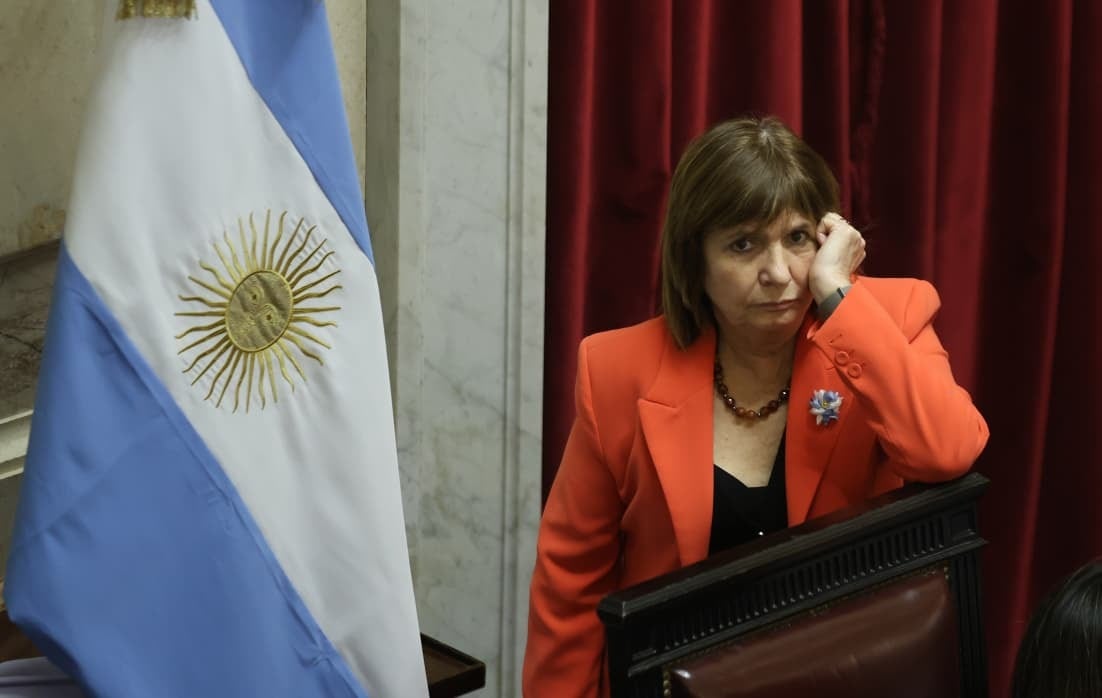
Bullrich's defiance raises questions about Milei's re-election bid
Translated from Spanish, summarized and contextualized by DistantNews.
At a glance
News
Sources not specified
Context piece
- Senator Patricia Bullrich publicly challenged President Javier Milei's directive to withdraw a judicial nomination, creating internal government friction.
- The incident has fueled speculation about alternative presidential ambitions within the ruling party for 2027 and raised questions about Milei's re-election prospects.
- The government faces a dilemma balancing macroeconomic achievements with public hardship, testing citizen patience with austerity measures.
Senator Patricia Bullrich has placed President Javier Milei's administration in a precarious position, sparking internal conflict with her public defiance of a presidential directive. While the Milei brothers initially appeared to forgive Bullrich for questioning deeply held presidential positions, her challenge has intensified the "persecutory climate" plaguing the government after a difficult quarter marked by judicial scandals, disappointing economic results, and uncontrolled factionalism.
"She's two tweets away from being declared a traitor," a ruling party senator remarked on Thursday, following the conflict's development. The dispute began when Bullrich announced her "conscientious objection" to Milei's order to withdraw the judicial nomination of María Verónica Michelli, who is the sister-in-law of investigative journalist Hugo Alconada Mon. Bullrich had informed the President of her intentions in a face-to-face meeting, detailing the exchange to the media and even offering her resignation as head of the La Libertad Avanza (LLA) bloc. On Wednesday, Karina Milei summoned Bullrich to her office, seemingly to de-escalate the situation with a photograph of the two smiling – a gesture that has preceded the expulsion of several "libertarians" from the party.
The episode involving Bullrich reveals more than just a problem of internal discipline. It has introduced, contrary to the official discourse, the suspicion that an alternative presidential project for 2027 is brewing within the ruling party. This has left the government with an uncomfortable question: can Milei lose the battle for re-election? The President recently promised that Argentina is entering "the best 30 years" of its history. His speeches blend hyperbole, theoretical digressions, and emotional outbursts, all converging toward a single goal: convincing the nation and the world that his radical model change will usher in a tangible era of prosperity in time to secure a comfortable victory next year. This is what Minister Luis Caputo implied when he predicted that "the economy will run over politics."
The emphasis on economic recovery highlights Milei's central dilemma: the disconnect between macroeconomic achievements, such as fiscal balance, reduced inflation, and currency stability, and the hardships felt on the streets, including falling consumption, rising loan defaults, declining wages, and factory closures. How long will citizens' patience with austerity last? Even among Milei's own supporters and allies, there is no unanimous confidence in the plan's design. Bullrich's rebellion has ignited a subdued discussion about whether the economy will indeed improve politics, or if the reverse is true. In essence, can a government lacking internal order successfully manage Argentina's complex economy? Milei has sidelined Vice President Victoria Villarruel and his chief of staff.
DistantNews Editorial
Originally published by La Nación in Spanish. Translated, summarized, and contextualized by our editorial team with added local perspective. Read our editorial standards.
More Stories


From Our Blog

What Gets Lost (and Found) When News Is Translated

The Critical Role of Diaspora Media in Global News

What Travellers Should Know About Countries with Restricted Press

A Digital Nomad's Guide to Following Local News

How the Same Story Looks Different in Different Countries
