


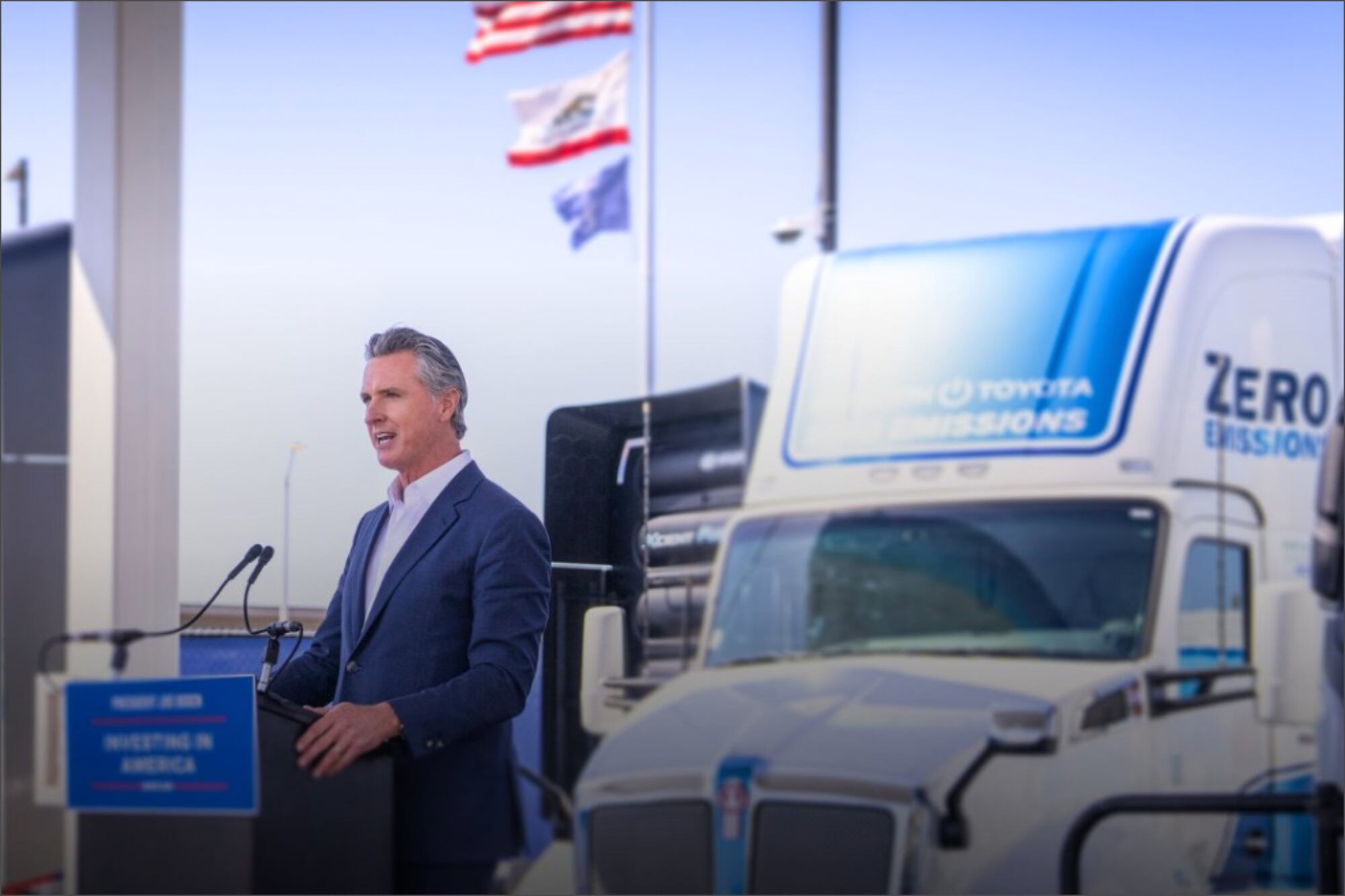
California Exceeds $1 Billion in Clean Truck and Bus Incentives
Translated from Spanish, summarized and contextualized by DistantNews.
TLDR
- California has surpassed $1 billion in incentives for clean trucks and buses through its Clean Truck and Bus Incentive Project (HVIP).
- The program has supported over 2,000 fleets, deploying 11,600 zero-emission vehicles, and accumulating 181 million zero-emission miles driven.
- These initiatives are part of California's broader climate goals, aiming for all new cars to be zero-emission by 2035 and heavy-duty trucks by 2045.
California is demonstrating its unwavering commitment to a zero-emission future, with Governor Gavin Newsom announcing a significant milestone: the Clean Truck and Bus Incentive Project (HVIP) has now allocated over $1 billion in funding. This achievement, celebrated during Earth Week, underscores the state's aggressive push towards decarbonizing its transportation sector, a critical step in combating climate change.
The HVIP program, launched in 2009, has proven instrumental in accelerating the adoption of clean vehicles. By providing point-of-sale discounts, it has made zero-emission trucks and buses more accessible to fleets across the state. The numbers speak for themselves: over 2,000 fleets have benefited, leading to the deployment of 11,600 clean vehicles and the accumulation of an impressive 181 million zero-emission miles. This tangible progress highlights California's proactive approach to environmental regulation and its success in incentivizing the transition away from fossil fuels.
California announced that it exceeded US$1000 million in incentives for clean trucks and buses.
These efforts are intrinsically linked to California's ambitious climate goals. The state aims to slash greenhouse gas emissions by 85% by 2045 and mandates that all new passenger cars sold be zero-emission by 2035. The expansion of charging infrastructure, with over 200,000 public EV charging stations and millions more at homes, further supports this transition. From California's perspective, these initiatives are not just about environmental protection; they represent a forward-thinking economic strategy, fostering innovation and creating jobs in the burgeoning clean energy sector, while simultaneously improving air quality for its residents.
The incentives have high demand, with US$200 million requested on the first day applications opened last fall.
DistantNews Editorial
Originally published by La Nación in Spanish. Translated, summarized, and contextualized by our editorial team with added local perspective. Read our editorial standards.
More Stories



From Our Blog

What Gets Lost (and Found) When News Is Translated

The Critical Role of Diaspora Media in Global News

What Travellers Should Know About Countries with Restricted Press

A Digital Nomad's Guide to Following Local News

How the Same Story Looks Different in Different Countries
