

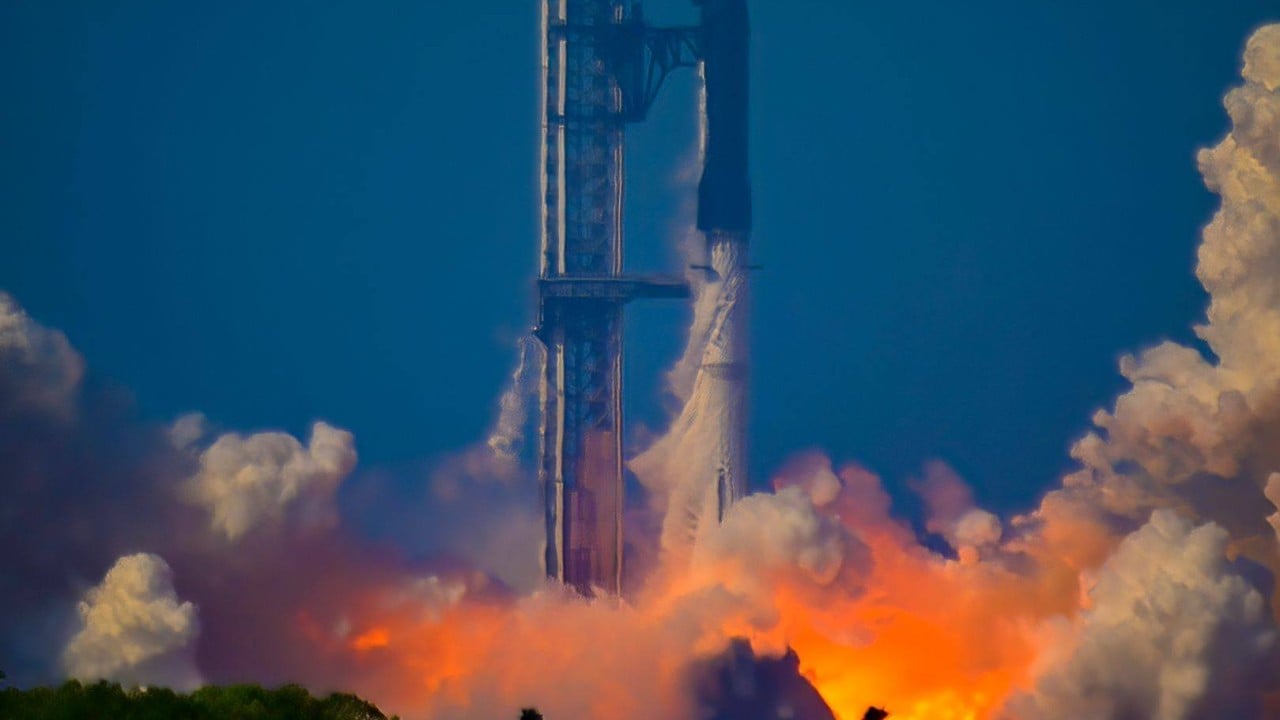

Can China’s ‘CO2 rocket’ launch cold on the same gas that carbonates Coca-Cola?
Summarized and contextualized by DistantNews.
At a glance
News
Named sources
New plan
- Chinese aerospace firm Zhiyu Aerospace Technology plans to launch rockets using carbon dioxide in a "supercritical carbon dioxide cold-launch" method.
- This innovative technique aims to achieve low-cost, high-frequency, and fast-response commercial launches.
- The system uses a fluid state of CO2 to eject the rocket, which then ignites its engines mid-air, avoiding ground-level exhaust issues.
A Chinese aerospace startup, Zhiyu Aerospace Technology, is pioneering a novel rocket launch method that utilizes carbon dioxide, the same gas found in carbonated beverages. The company announced its collaboration with another tech firm to apply "supercritical carbon dioxide cold-launch" technology to small launch vehicles.
This cutting-edge approach, also known as Z-Trak Space, promises to enable "truly low-cost, high-frequency, fast-response commercial launches," according to the company. The technology involves using supercritical carbon dioxide, a state where the gas is held at or above its critical temperature and pressure, to generate high-pressure gas. This gas then expands rapidly, propelling the rocket into the air.
A key advantage of this method is that the rocket's engines ignite only after it has reached a designated altitude. This ensures that the intense exhaust fumes produced during ignition never come into contact with the ground launch platform, a significant departure from traditional "hot" launches where rockets ignite directly on the pad.
The partnership involves Z-Trak Space, founded in Zhuzhou, Hunan province, and Chiyang Space Power Technology Company. This development highlights China's ongoing efforts in advancing commercial space launch capabilities with innovative and potentially more sustainable technologies.
truly achieve low-cost, high-frequency, fast-response commercial launches
DistantNews Editorial
Originally published by South China Morning Post. Summarized and contextualized by our editorial team with added local perspective. Read our editorial standards.
More Stories

From Our Blog

Countries Without a Free Press: What You Need to Know

What Press Freedom Means for the News You Read

What Gets Lost (and Found) When News Is Translated

The Critical Role of Diaspora Media in Global News

What Travellers Should Know About Countries with Restricted Press
