


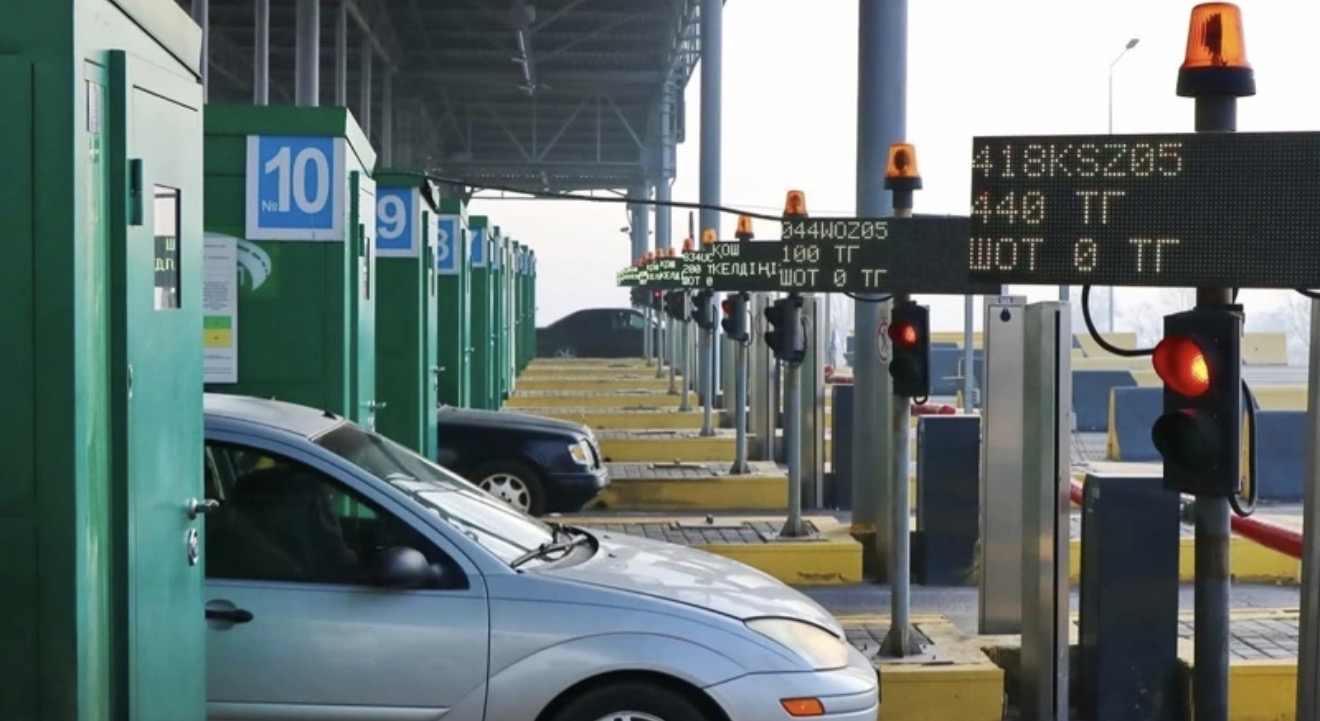
Can Kazakhstan Balance Cheap Toll Roads With Modernization?
Summarized and contextualized by DistantNews.
At a glance
News
Named sources
Context piece
- Kazakhstan maintains some of the world's most affordable toll roads, with passenger vehicles paying an average of US$0.44 per 100 km.
- This low pricing supports the country's goal of being a major Eurasian transport hub by reducing transit costs.
- However, maintaining road quality with low tariffs remains a challenge, prompting experts to call for modern engineering approaches.
Kazakhstan continues to offer one of the world's most affordable toll road systems, with passenger vehicles paying an average of just 207 tenge (US$0.44) per 100 kilometers on its highest-standard Category I highways. This pricing strategy is not aimed at maximizing revenue but aligns with Kazakhstan's broader economic objectives. By keeping tolls low, the country reduces transport costs across its vast territory, enhancing its competitiveness as a crucial transit corridor connecting China, Central Asia, Europe, and the Caspian region. Commercial vehicles are charged based on weight due to their greater impact on road wear, while passenger vehicles are only tolled on the top-tier highways. The government approves these tariffs, linking them to a monthly calculation index. Despite the affordability, maintaining road quality presents a significant challenge. National road operator KazAvtoZhol has acknowledged this by suspending tolls on sections with defects affecting safety until repairs are completed. The government has invested heavily in road upgrades, with over 34,000 kilometers scheduled for repair between 2019 and 2025, aiming for 94% of national and 91% of local roads to meet official standards. However, public concerns persist about road maintenance across the extensive 95,000-kilometer network, a challenge attributed by Transport Minister Nurlan Sauranbayev to a funding gap. Experts suggest that long-term road sustainability also depends on modern engineering. Some existing road designs may be outdated, struggling to cope with increased freight traffic and extreme climatic conditions, which include temperature swings exceeding 100 degrees Celsius. This rapid deterioration highlights the need for innovative approaches in road construction tailored to regional environments.
comparable toll roads in China, France, Japan, Russia and Türkiye cost 15 to 40 times more.
DistantNews Editorial
Originally published by The Astana Times. Summarized and contextualized by our editorial team with added local perspective. Read our editorial standards.
More Stories



From Our Blog

What Gets Lost (and Found) When News Is Translated

The Critical Role of Diaspora Media in Global News

What Travellers Should Know About Countries with Restricted Press

A Digital Nomad's Guide to Following Local News

How the Same Story Looks Different in Different Countries
