


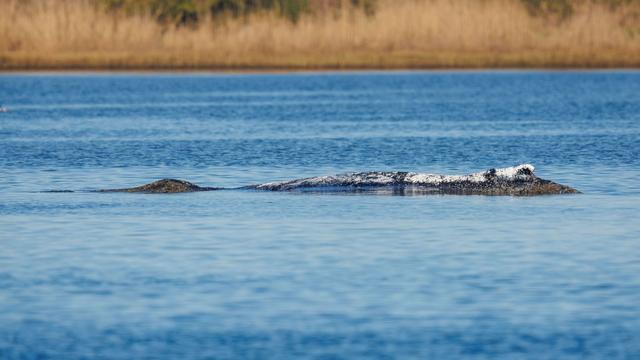
Can whale rescue still succeed?: Whale has not moved overnight
Translated from German, summarized and contextualized by DistantNews.
TLDR
- A stranded humpback whale in the Wismarbucht bay has not moved overnight, remaining in the shallow waters near the exit to the bay.
- Efforts to free the whale involved pumping out silt, which has deepened the water around it, but low water levels persist as a problem.
- The whale's situation is precarious due to its own weight in shallow water and the challenge of moving out of the artificially deepened channel.
The plight of a stranded humpback whale in the Wismarbucht bay has captured public attention, with ongoing efforts to rescue the approximately 12-meter-long creature. As of early morning, the whale remained stationary in the shallow waters at the bay's exit, a situation that has persisted overnight. While initial rescue operations focused on pumping out silt to create a deeper channel, allowing the whale to float more easily and alleviate pressure from its own weight, the persistent problem of low water levels continues to pose a significant threat.
Live streams show the whale's back moving and it breathing, indicating it is still alive. However, the artificial channel created to help it float might now make it harder for the whale to maneuver and escape. The Federal Maritime and Hydrographic Agency reported that water levels are currently 20 centimeters below normal, with only a slight increase expected around noon before dropping again in the evening. This fluctuating water level creates a critical challenge for the whale's survival and the success of the rescue operation.
The whale is still at the exit of the Wismarbucht.
The situation is a stark reminder of the delicate balance of marine ecosystems and the impact of environmental factors, such as low tides, on vulnerable wildlife. The community and rescue teams are working tirelessly, but the natural conditions present a formidable obstacle. The whale's continued presence in this precarious position highlights the challenges faced in wildlife rescue operations, where human intervention must contend with the unpredictable forces of nature.
From a German perspective, this event underscores our deep connection to the Baltic Sea and our commitment to protecting its marine life. While international news might report on the rescue attempt, the local focus in Schleswig-Holstein is on the immediate welfare of this specific animal and the dedicated efforts of the local authorities and volunteers. The challenges posed by the low water levels, influenced by weather patterns and tidal cycles, are a familiar concern for coastal communities. This incident serves as a poignant local story, reflecting our responsibility towards the natural environment and the often difficult, complex nature of conservation efforts in our coastal waters.
The water level is currently 20 centimeters below normal.
DistantNews Editorial
Originally published by Die Zeit in German. Translated, summarized, and contextualized by our editorial team with added local perspective. Read our editorial standards.
More Stories



From Our Blog

What Gets Lost (and Found) When News Is Translated

How the Same Story Looks Different in Different Countries

The Critical Role of Diaspora Media in Global News

What Travellers Should Know About Countries with Restricted Press

A Digital Nomad's Guide to Following Local News
