


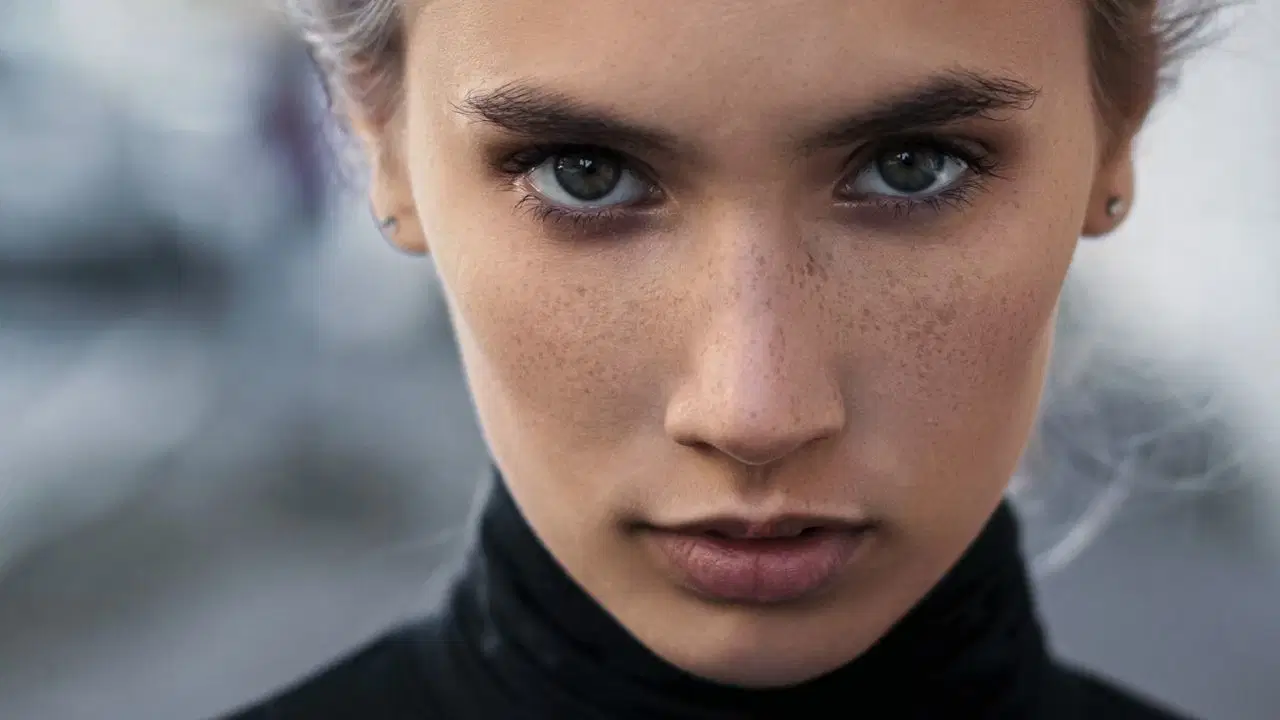
Can You Learn to Spot an AI-Generated Face? It's Getting Harder
Translated from Turkish, summarized and contextualized by DistantNews.
At a glance
News
Named sources
Context piece
- The increasing sophistication of AI-generated faces makes them difficult to distinguish from real people, leading to widespread fraud.
- A new study tested an approach to train people to better detect AI-generated faces by focusing on holistic assessment rather than specific flaws.
- This research addresses the growing problem of AI-driven scams, which are projected to cost the US $40 billion next year.
It's becoming increasingly difficult to tell if a face on your screen is real or generated by artificial intelligence. A recent scam saw an employee lose $25 million after realizing everyone in a crucial meeting, including the supposed finance director, was an AI-generated deepfake.
We are now really bad at recognizing AI-generated faces.
Consulting firm Deloitte predicts that fraud using generative AI could cost the U.S. $40 billion next year. This alarming trend prompted Amy Dawel, an associate psychology professor at the Australian National University, to investigate whether people can be trained to identify AI-generated faces more effectively. "We are now really bad at recognizing AI-generated faces," Dawel stated.
Dawel and her colleagues tested a novel training approach, published in the journal PNAS. Instead of teaching people to spot AI "tells" like mismatched earrings or distorted features, they trained participants to make instinctive judgments by evaluating each face holistically. This is a departure from previous assumptions, as Dawel explained, "One of the problems is that we expect AI-generated faces to look weird based on our past experiences. But in fact, it's the human faces that are not perfectly symmetrical and look a bit unusual. So the whole equation has been reversed."
One of the problems is that we expect AI-generated faces to look weird based on our past experiences. But in fact, it's the human faces that are not perfectly symmetrical and look a bit unusual. So the whole equation has been reversed.
Previous research from Dawel's lab found that AI-generated faces were more often judged as "human" than real ones, a phenomenon termed "AI hyperrealism." Dawel attributes this to algorithms averaging thousands of training faces, resulting in AI-generated visages that appear "more average, or even hyper-average" compared to real human faces. This can make AI faces seem "slightly more trustworthy and attractive, and feel more familiar" than genuine ones. However, this study focused only on AI faces representing white individuals, as current AI algorithms are disproportionately trained on images of white people.
AI-generated faces, when compared to human faces, actually look more average, or even hyper-average.
DistantNews Editorial
Originally published by Cumhuriyet in Turkish. Translated, summarized, and contextualized by our editorial team with added local perspective. Read our editorial standards.
More Stories


From Our Blog

What Gets Lost (and Found) When News Is Translated

The Critical Role of Diaspora Media in Global News

What Travellers Should Know About Countries with Restricted Press

A Digital Nomad's Guide to Following Local News

How the Same Story Looks Different in Different Countries
