


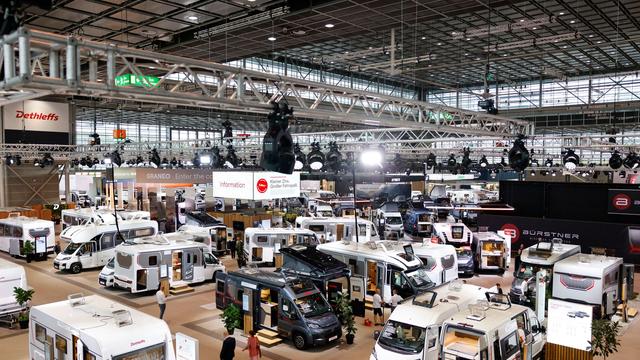
Caravan industry embraces self-sufficiency trend at Caravan Salon trade fair
Translated from German and summarized by DistantNews. Read the original for the full story.
At a glance
News
Sources not specified
Context piece
- The Caravan Salon trade fair in Düsseldorf highlights a growing trend towards self-sufficiency in recreational vehicles.
- Manufacturers are offering models with larger batteries, water tanks, and solar power systems to enable longer independent travel.
- This trend appeals to couples and friends seeking to travel to remote locations like farms or vineyards without relying on traditional campsites.
The Caravan Salon trade fair in Düsseldorf is showcasing a significant shift in the recreational vehicle industry: a growing demand for self-sufficiency, or 'autarky.' More caravan enthusiasts want to travel for extended periods without the constant need to recharge batteries or refill water tanks. This appeals to a clientele that prefers parking on farms, vineyards, or forest edges rather than occupying adjacent pitches at traditional campsites.
There is a strongly growing clientele that does not want to stand 'pitch by pitch' at the campsite, but prefers to go to the farm, to the vintner, or to the edge of the forest and ask if they can stay there for a few days.
Daniel Onggowinarso from the Caravaning Industry Association noted this evolving customer preference. He explained that while families with children often still prefer campsites, couples and friends are increasingly seeking the freedom to drive to a vineyard on a Friday evening after work and stay without concern. Manufacturers are responding by expanding their offerings to meet this enhanced desire for independence.
If the battery is too small and there is no power connection available, such a plan can quickly become uncomfortable.
Key innovations include larger batteries, expanded water storage, and integrated photovoltaic (solar) systems. While these advanced capabilities have long been standard in off-road expedition vehicles, they are now being increasingly incorporated into mass-market models. This enhanced independence, however, comes at a price, typically increasing the cost of the vehicles.
It is about people who like to go on short trips and who drive to the vintner on Friday evenings after work and simply want to stay there carefree.
Hymer's B-ML model exemplifies this trend, with a base price of around 178,000 euros, and a displayed version costing approximately 230,000 euros. This model features a large gas tank for cooking, heating water, or running the heating system, offering roughly double the gas capacity of other vehicles. Hymer has also upgraded its solar power system and optimized its toilet system to reduce water consumption, extending the time between necessary refills for a four-person family from two days to six or seven. The onboard fresh water tank now holds 200 liters, an increase of 20 liters.
The manufacturers are meeting the increased desire for autonomy.
About this summary
Originally published by Die Zeit in German. Translated, summarized, and contextualized automatically by DistantNews, with a note on how the source frames the story. Not individually reviewed before publishing. How this works.
More Stories

From Our Blog

What Gets Lost (and Found) When News Is Translated

How the Same Story Looks Different in Different Countries

The Critical Role of Diaspora Media in Global News

What Travellers Should Know About Countries with Restricted Press

A Digital Nomad's Guide to Following Local News
