


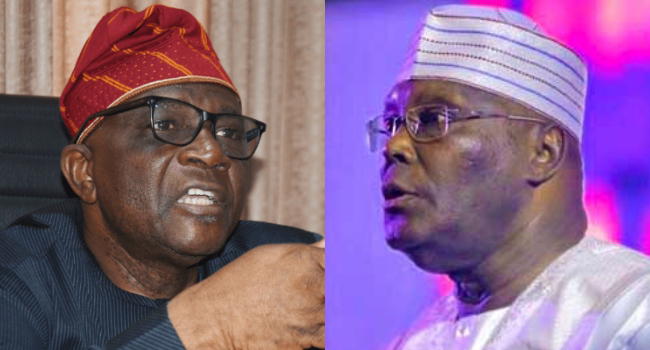
Catholic priests not like ‘fake bishops’, Atiku flays presidency’s attack on Onaiyekan
Summarized and contextualized by DistantNews.
At a glance
News
Named sources
Context piece
- Presidential candidate Atiku Abubakar criticized the presidency's attack on Catholic Archbishop John Cardinal Onaiyekan.
- Abubakar accused the administration of intolerance towards dissent and uncomfortable truths.
- He stated that Catholic bishops, unlike "fake bishops," speak truth to power and cannot be used for political propaganda.
Presidential candidate Atiku Abubakar has condemned the Nigerian presidency's response to Catholic Archbishop John Cardinal Onaiyekan, accusing the administration of growing intolerance. Abubakar asserted that the presidency attacked the cleric and the Catholic Church instead of addressing the substance of Onaiyekan's message about the nation's struggles. The cardinal had recently told President Bola Tinubu that Nigeria is "bleeding" and its economy is failing its citizens. Abubakar suggested the presidency's reaction stemmed from a habit of relying on "fake and compliant clerics" for political messaging. He contrasted this with the independence of Catholic bishops, whom he described as shepherds with a moral duty to speak truth to power, regardless of who is displeased. "They cannot be used," Abubakar stated, emphasizing the church's historical role as a moral voice for the vulnerable. He characterized the presidency's commentary against Onaiyekan as arrogant and an attempt to distort the cleric's engagement with the president. Abubakar argued that a confident government welcomes criticism for improvement, while an insecure one attacks honest voices.
Perhaps the Presidency has become so accustomed to inviting ‘fake bishops’ that it now assumes every cleric can be recruited into political propaganda. But Catholic bishops are different. They are not political props, rented cheerleaders or praise singers. They are shepherds with a moral obligation to speak truth to power, regardless of whose interests are bruised. They cannot be used.
DistantNews Editorial
Originally published by Vanguard. Summarized and contextualized by our editorial team with added local perspective. Read our editorial standards.
More Stories
From Our Blog

How the Same Story Looks Different in Different Countries

What Gets Lost (and Found) When News Is Translated

The Critical Role of Diaspora Media in Global News

What Travellers Should Know About Countries with Restricted Press

A Digital Nomad's Guide to Following Local News
