

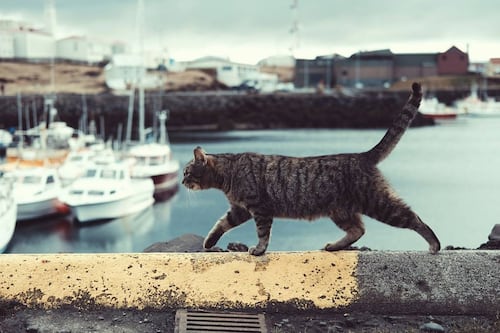
Cats brought to remote island to fight mice now threaten bird extinction, costing $25 million
Translated from Spanish, summarized and contextualized by DistantNews.
At a glance
News
Sources not specified
New plan
- In 1949, five cats were introduced to remote Marion Island to control a mouse plague, inadvertently causing an ecological crisis.
- The cats decimated native seabird populations, leading to a 14-year eradication program that ended in 1991.
- Now, the mice, unchecked by predators, threaten 19 bird species with extinction, prompting a $25 million operation to reintroduce poison bait.
A well-intentioned, yet disastrous, environmental solution from 1949 has led to a crisis on remote Marion Island, requiring a $25 million operation decades later. Personnel at a subantarctic meteorological station introduced five domestic cats to combat a growing mouse infestation affecting their facilities.
Marion Island, a natural sanctuary located approximately 2,300 kilometers south of mainland Africa, had evolved over millennia without terrestrial mammalian predators. Seabird species, including petrels and wandering albatrosses, nested on the ground, making them easy prey for the introduced felines. Without natural defenses, these birds became vulnerable, and the cat population exploded, reportedly killing an estimated 450,000 birds annually by the 1970s.
Authorities launched a complex eradication program in 1977, employing intensive trapping, night hunting, and the feline panleukopenia virus. This effort spanned over a decade, with the last cat eliminated in 1991. However, the removal of the cats exposed a new threat: the mice, originally introduced by whalers in the 19th century, multiplied rapidly without their natural predators.
The Mouse-Free Marion Project, a collaboration between South Africa's Department of Forestry, Fisheries and the Environment and BirdLife South Africa, now faces the challenge of eradicating the rodents. The project describes the mice as attacking eggs, chicks, and adult birds, placing 19 of the island's 29 nesting bird species at risk of local extinction. The planned operation, the largest rodent eradication attempt on a single island, will utilize GPS-guided helicopters to distribute poison bait across the 30,000-hectare volcanic terrain.
DistantNews Editorial
Originally published by El Universal in Spanish. Translated, summarized, and contextualized by our editorial team with added local perspective. Read our editorial standards.
More Stories


From Our Blog

What Press Freedom Means for the News You Read

What Gets Lost (and Found) When News Is Translated

The Critical Role of Diaspora Media in Global News

What Travellers Should Know About Countries with Restricted Press

A Digital Nomad's Guide to Following Local News
