


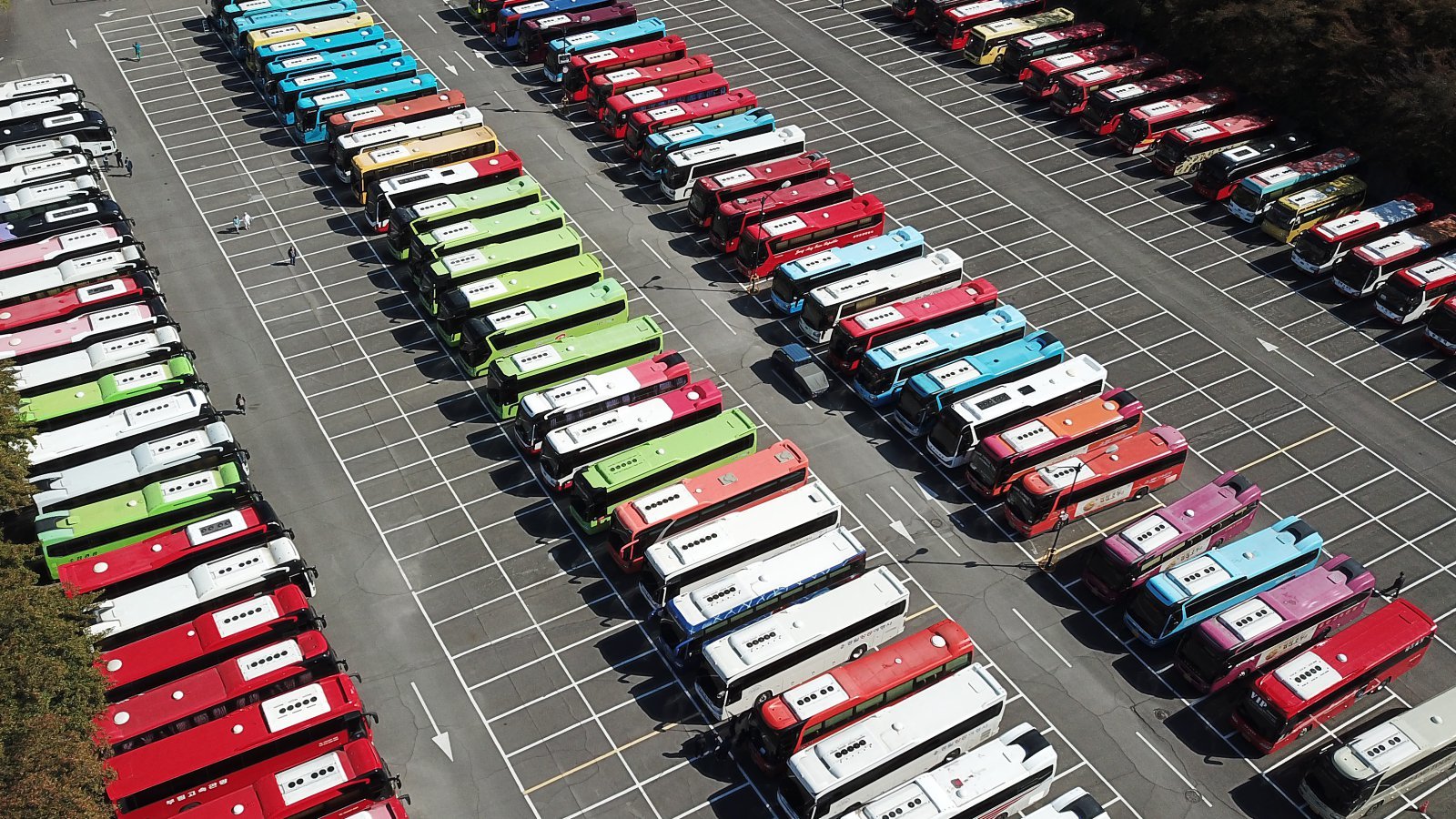
Charter Buses to Receive Fuel Subsidies Amid Rising Costs
Translated from Korean, summarized and contextualized by DistantNews.
At a glance
News
Sources not specified
New plan
- The South Korean government will include charter buses used for commuting and school transport in its fuel subsidy program.
- This expansion aims to support the charter bus industry, which faces increased operational costs due to high fuel prices and has seen its public service role grow.
- The Ministry of Land, Infrastructure and Transport will revise detailed guidelines for subsidies next month, with the program set to begin soon.
South Korea is expanding its fuel subsidy program to include charter buses that are increasingly used for public transportation, such as commuting to work and school. The government announced that the revision to the Passenger Transport Service Act, which includes charter buses in the diesel fuel subsidy, passed the State Council meeting.
This move reflects the growing public function of charter buses, driven by increased demand for commuting and school transport. The proportion of charter bus operations for commuting and school purposes has risen significantly from 46% in 2005 to 73% in 2023. The government also recognizes the industry's financial strain due to prolonged high fuel prices, with average monthly fuel costs per vehicle increasing by approximately 370,000 won compared to the previous quarter.
The Ministry of Land, Infrastructure and Transport plans to revise the detailed guidelines for the fuel subsidy program, including the subsidy rate and payment methods, within the next month. The ministry urged the industry to prepare necessary procedures, such as applying for subsidy cards, in advance. Additionally, the government extended the fuel price stabilization subsidy for cargo and passenger transport by three months until the end of September, further easing the burden on the transportation sector.
DistantNews Editorial
Originally published by Dong-A Ilbo in Korean. Translated, summarized, and contextualized by our editorial team with added local perspective. Read our editorial standards.
More Stories



From Our Blog

What Gets Lost (and Found) When News Is Translated

The Critical Role of Diaspora Media in Global News

What Travellers Should Know About Countries with Restricted Press

A Digital Nomad's Guide to Following Local News

How the Same Story Looks Different in Different Countries
