


South Korean Regional Lawmakers Demand Transparency in Semiconductor Cluster Site Selection
Translated from Korean, summarized and contextualized by DistantNews.
At a glance
News
Named sources
Context piece
- Members of the ruling People Power Party from the Busan, Ulsan, and Gyeongnam (Bu-Ul-Gyeong) region protested the government's semiconductor cluster plan.
- They demanded the disclosure of the evaluation criteria used to select the Honam region for the cluster.
- The lawmakers argued that semiconductor site selection should not be influenced by political considerations or regional votes.
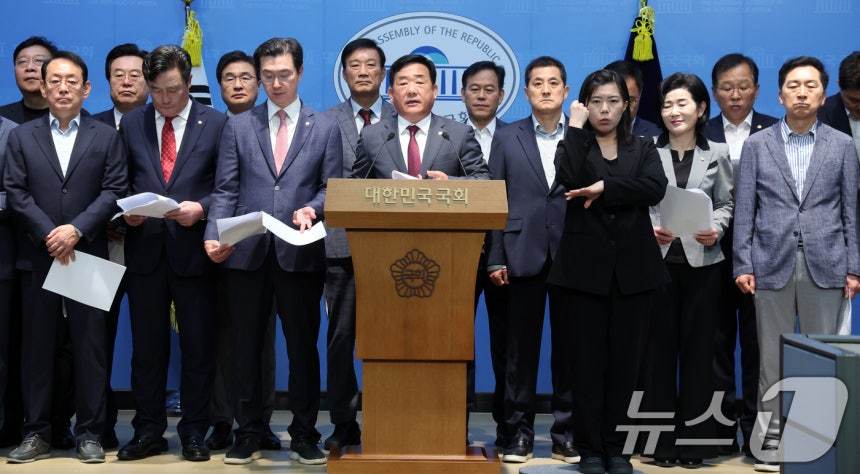
Lawmakers from South Korea's People Power Party representing the Busan, Ulsan, and Gyeongnam (Bu-Ul-Gyeong) region have voiced strong opposition to the government's plan to establish a semiconductor cluster in the Honam region. In a press conference held at the National Assembly, the group demanded the immediate public release of the evaluation criteria used for selecting the Honam site.
Semiconductors are not factories built on votes.
The Bu-Ul-Gyeong representatives asserted that the placement of a national strategic industry like semiconductors should not be determined by political expediency or the pursuit of regional votes. They explicitly stated that their protest is not aimed at hindering the development of the Honam region but rather at ensuring that crucial industrial decisions are based on objective, strategic factors rather than political maneuvering.
We are not here to oppose the development of the Honam region. Nor are we trying to hinder the growth of a specific region.
"Semiconductors are not factories built on votes," the lawmakers declared, emphasizing that such decisions should transcend political cycles and regional favoritism. They argued that the future of South Korea's semiconductor industry depends on rational planning that considers essential infrastructure like power, water, talent, land, logistics, and a robust supply chain ecosystem, rather than being swayed by a single presidential directive or the ruling party's political calendar.
The location of a national strategic industry should not be interfered with by politics in the name of balanced development.
DistantNews Editorial
Originally published by Dong-A Ilbo in Korean. Translated, summarized, and contextualized by our editorial team with added local perspective. Read our editorial standards.
More Stories


From Our Blog

What Gets Lost (and Found) When News Is Translated

The Critical Role of Diaspora Media in Global News

What Travellers Should Know About Countries with Restricted Press

A Digital Nomad's Guide to Following Local News

How the Same Story Looks Different in Different Countries
