


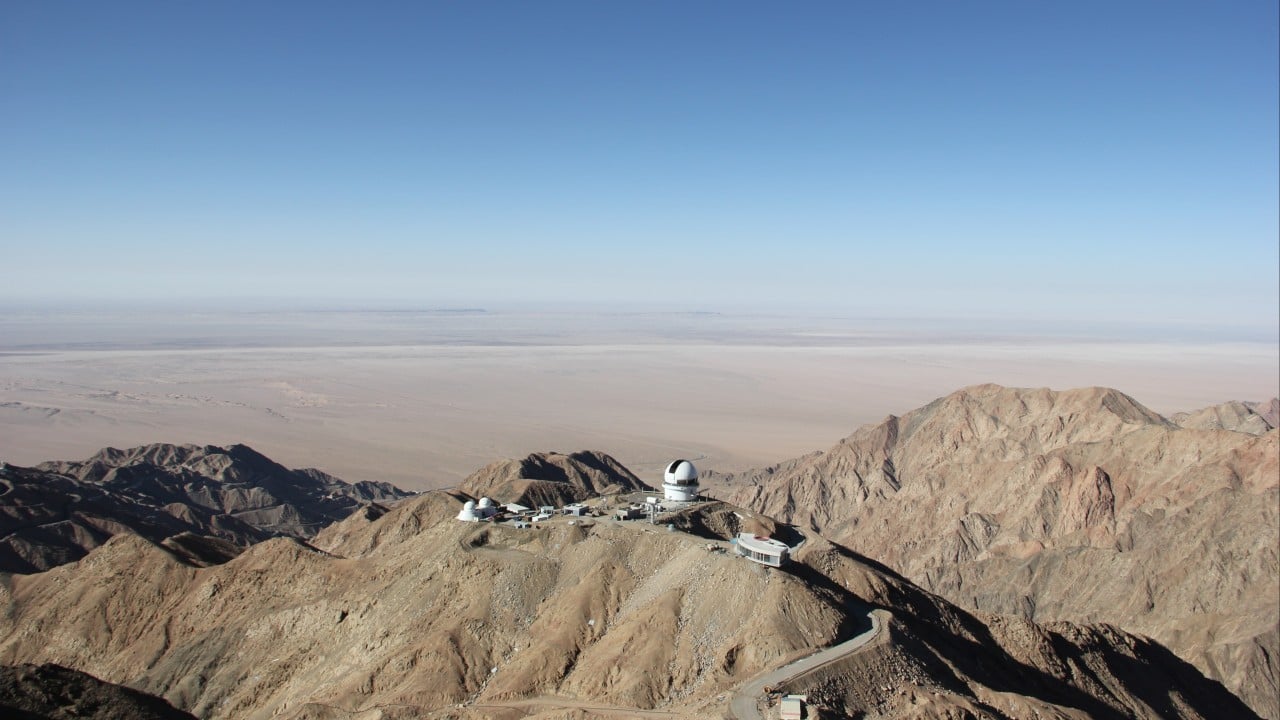
China aims to build world's largest astronomy base on Saishiteng Mountain
Translated from English, summarized and contextualized by DistantNews.
At a glance
News
Named sources
Ongoing story
- China is developing Saishiteng Mountain in Qinghai province into the world's largest astronomy base, aiming for completion by the mid-2030s.
- The base will feature powerful optical telescopes, with sizes ranging from 6.5 to 14.5 meters.
- This ambitious project positions China to become a global leader in astronomical research.
China is undertaking a significant project to transform Saishiteng Mountain in the northwestern Qinghai province into the world's largest astronomy base. Project scientists anticipate that by the mid-2030s, the site will house some of the most powerful optical telescopes on Earth.
The telescopes at Saishiteng Mountain will range in size from 6.5 meters to 14.5 meters in diameter. These advanced instruments are expected to significantly enhance China's capabilities in astronomical observation and research. The project is being led by the National Astronomical Observatories of China (NAOC) in Beijing, with Deng Licai serving as the lead scientist for site planning.
This development places China at the forefront of global astronomy, aiming to create a hub for cutting-edge research. The strategic location on the Tibetan plateau offers advantageous conditions for astronomical observation. The base is also planned to partner with dozens of other observatories, fostering international collaboration in the field.
the telescopes at Saishiteng Mountain in northwestern Qinghai province would stretch between 6.5 metres (21.3 feet) and 14.5 metres across, and partner with dozens of...
DistantNews Editorial
Originally published by South China Morning Post in English. Translated, summarized, and contextualized by our editorial team with added local perspective. Read our editorial standards.
More Stories


From Our Blog

Countries Without a Free Press: What You Need to Know

What Press Freedom Means for the News You Read

What Gets Lost (and Found) When News Is Translated

The Critical Role of Diaspora Media in Global News

What Travellers Should Know About Countries with Restricted Press
