

China and US bring tech dispute to Dominican Republic
Translated from Spanish, summarized and contextualized by DistantNews.
At a glance
News
Sources not specified
Context piece
- The U.S. and China have publicly clashed in the Dominican Republic over the security of Chinese technology.
- The U.S. warned of espionage risks from companies like Huawei, while China accused the U.S. of "technological intimidation."
- The exchange places the Dominican Republic at the center of the strategic competition between the two global powers.
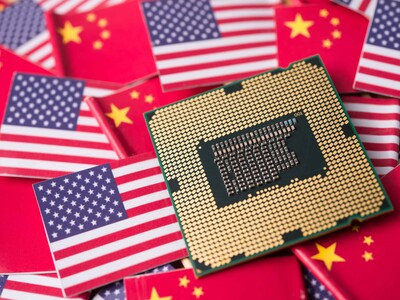
A public dispute between the United States and China over the security of Chinese technology has emerged in the Dominican Republic, marking a new front in the ongoing rivalry between the two global powers.
The U.S. message sustained that the technologies of those companies represent a risk because, ultimately, they are subject to the interests of the Chinese Government and the legislation of that country obliges them to cooperate with Beijing's intelligence services.
The controversy began when the U.S. Embassy in Santo Domingo shared a warning from Washington regarding Chinese technology firms such as Huawei, ZTE, Hikvision, Hytera, Dahua, and DJI. The U.S. message asserted that these companies' technologies pose a risk because they are ultimately subject to Chinese government interests and intelligence cooperation mandates under Chinese law. Washington warned of potential espionage, cyberattacks, and network disruptions, urging partners in the Americas to replace such equipment with trusted providers to safeguard citizens and sovereignty. The statement did not identify specific Dominican institutions using these technologies or cite concrete incidents.
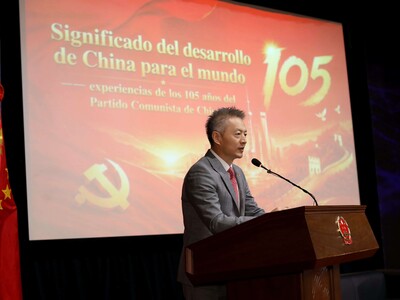
China's ambassador to the Dominican Republic, Chen Luning, responded forcefully, rejecting the U.S. accusations as "pure invention" and a distortion of reality. He attributed the warnings to a "Cold War mentality" and accused the U.S. of "arrogance and prejudice." Ambassador Chen defended the targeted Chinese companies, stating they comply with local laws and regulations, offer advanced technology at competitive prices, provide secure and efficient services, and contribute to economic development and job creation in Latin America and the Caribbean, including the Dominican Republic.
The Chinese ambassador in the Dominican Republic, Chen Luning, rejected the U.S. accusations, expressed his Government's "strong dissatisfaction and resolute opposition," and maintained that the accusations are a "pure invention" and a distortion of reality.
The Chinese embassy escalated the rhetoric, characterizing the U.S. warning as an act of "technological intimidation and unilateral coercion." Beijing urged Washington to abandon what it called "political manipulation and irresponsible statements" and to cease interfering with "the right of sovereign states to freely choose their cooperation partners." This public exchange places the Dominican Republic directly within the strategic competition between Washington and Beijing for control and security of telecommunications networks.
The diplomatic representation of China went even further by considering the North American warning as an exercise in "technological intimidation and unilateral coercion."
DistantNews Editorial
Originally published by Diario Libre in Spanish. Translated, summarized, and contextualized by our editorial team with added local perspective. Read our editorial standards.
More Stories



From Our Blog

What Gets Lost (and Found) When News Is Translated

The Critical Role of Diaspora Media in Global News

What Travellers Should Know About Countries with Restricted Press

A Digital Nomad's Guide to Following Local News

How the Same Story Looks Different in Different Countries
