


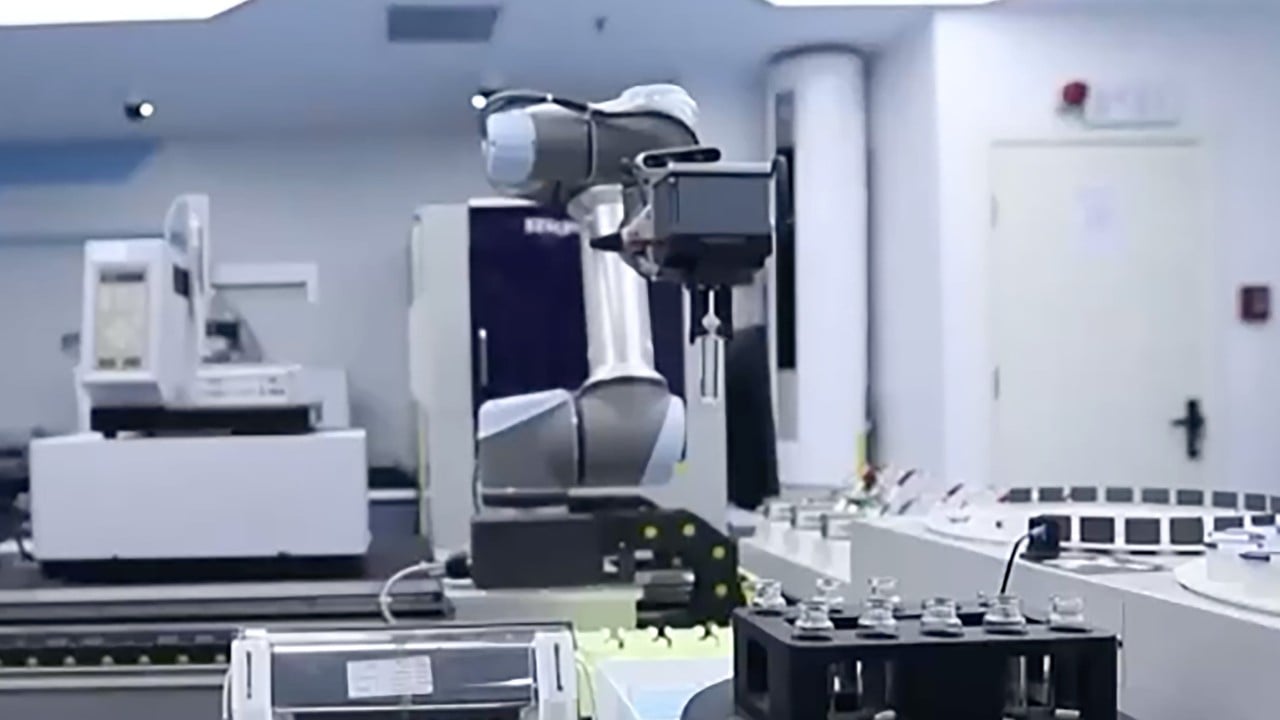
China Doubles 'AI for Science' Computing Scale in 2 Months Using No US Chips
Translated from English, summarized and contextualized by DistantNews.
TLDR
- China's largest AI computing cluster for scientific research has become operational, doubling its domestic AI accelerator chips in two months.
- The Zhengzhou core node now houses 60,000 domestically made chips, up from 30,000 in early February, making it China's most powerful scientific intelligent computing infrastructure.
- This development is seen as a breakthrough for China in AI-driven scientific research infrastructure, aiming to secure a leading position in AI industrial applications.
China has achieved a significant milestone in its pursuit of AI dominance with the operationalization of its largest artificial intelligence computing cluster dedicated to scientific research. State broadcaster CCTV reported that the number of domestically produced AI accelerator chips within the Zhengzhou core node has doubled in just two months, reaching an impressive 60,000 units. This rapid expansion, from 30,000 chips in early February to its current capacity, solidifies its status as the nation's most powerful scientific intelligent computing infrastructure.
This advancement represents a critical breakthrough for China in developing indigenous computing infrastructure for AI-driven scientific research. The government views this achievement as instrumental in seizing the "commanding heights" of AI industrial applications, a strategic objective for the nation's technological and economic future. The development directly addresses long-standing challenges faced by Chinese researchers, including limitations in computing power, software constraints, and a historical reliance on foreign suppliers for essential AI tools, as noted by the official Beijing Daily.
a breakthrough for China in computing infrastructure for AI-driven scientific research, which will help the country seize the commanding heights of AI industrial applications
The successful deployment of this cluster, utilizing exclusively non-US chips, underscores China's commitment to technological self-reliance. This is particularly significant in the current geopolitical climate, where access to advanced technology is increasingly subject to international scrutiny and potential restrictions. By doubling its computing scale in such a short period using domestic components, China signals its determination to build a robust and independent AI ecosystem, capable of supporting cutting-edge scientific discovery and fostering innovation across various industries.
From a Chinese perspective, this development is not merely a technological upgrade; it is a strategic imperative. It enables researchers to accelerate progress in fields ranging from materials science and drug discovery to climate modeling and fundamental physics. The enhanced computing power will allow for more complex simulations, larger datasets, and faster iteration cycles, ultimately driving innovation and reinforcing China's position as a global leader in scientific research and artificial intelligence.
including a shortage of computing power, software limitations and reliance on foreign suppliers for important tools
DistantNews Editorial
Originally published by South China Morning Post in English. Translated, summarized, and contextualized by our editorial team with added local perspective. Read our editorial standards.
More Stories


From Our Blog

Countries Without a Free Press: What You Need to Know

What Press Freedom Means for the News You Read

What Gets Lost (and Found) When News Is Translated

The Critical Role of Diaspora Media in Global News

What Travellers Should Know About Countries with Restricted Press
