


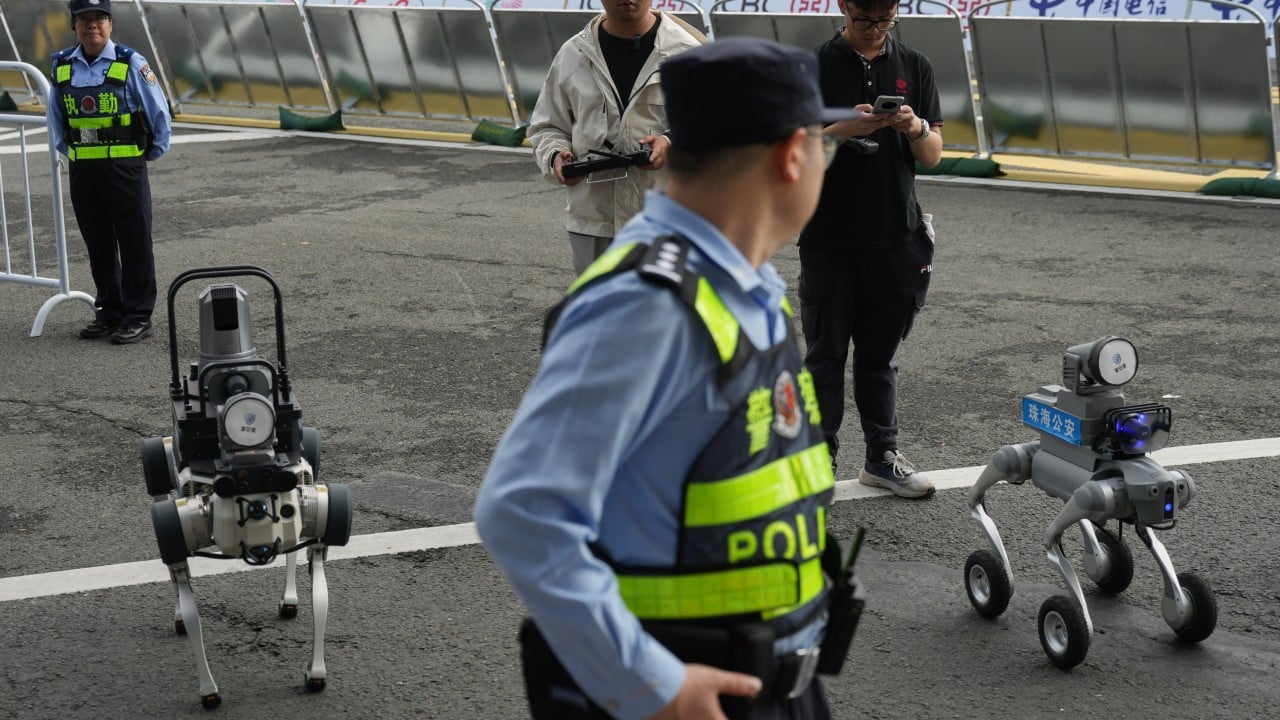
China's Armed Police Mull Riot Control Without Human Contact
Translated from English, summarized and contextualized by DistantNews.
TLDR
- China's People's Armed Police Force is exploring a future where urban unrest is managed by autonomous machines, eliminating direct human contact.
- A study outlines a scenario where roadblocks, crowd control drones, and AI-powered identification systems manage protests without police intervention.
- This technological approach aims to suppress dissent swiftly and efficiently, keeping security forces out of direct confrontation with the public.
A recent study from China's internal security forces, the People's Armed Police Force (PAP), offers a chilling glimpse into a potential future of crowd control – one devoid of human officers. As detailed in the South China Morning Post, the research envisions a scenario where urban unrest is managed entirely by autonomous machines, raising profound questions about the nature of policing and dissent.
The study outlines a sophisticated system involving AI-powered identification, automated roadblocks, and potentially even robotic enforcers. In a hypothetical scenario of a military-induced coup and subsequent protest, demonstrators are swiftly contained and key instigators identified and captured, all without a single soldier or police officer engaging them directly. This technological approach prioritizes efficiency and the removal of human risk for security forces, but at what cost to civil liberties and the right to protest?
From a Chinese perspective, such advancements in security technology are often framed as necessary for maintaining social stability and national security. The emphasis is on preventing chaos and swiftly quelling any signs of unrest, particularly in the context of rapid urbanization and potential social friction. While Western media might focus on the dystopian implications of autonomous policing, the internal Chinese narrative likely emphasizes the effectiveness and orderliness of such systems. The goal is to manage populations and potential threats with precision and minimal direct confrontation, reflecting a state-centric approach to security that prioritizes control and predictability.
DistantNews Editorial
Originally published by South China Morning Post in English. Translated, summarized, and contextualized by our editorial team with added local perspective. Read our editorial standards.
More Stories


From Our Blog

Countries Without a Free Press: What You Need to Know

What Press Freedom Means for the News You Read

What Gets Lost (and Found) When News Is Translated

The Critical Role of Diaspora Media in Global News

What Travellers Should Know About Countries with Restricted Press
