


China-Nepal floods: No one could have outrun the debris flow, research finds
Translated from English and summarized by DistantNews. Read the original for the full story.
At a glance
News
Named sources
Outcome reported
- A Chinese Academy of Sciences team calculated that the debris flow at the China-Nepal border moved at 19 metres per second.
- The speed was nearly twice Usain Bolt’s average speed during his 2009 100-metre world record and 50% faster than his top speed.
- Researchers said the disaster rapidly shifted from an ice avalanche to debris flow, mudslide and flood, leaving little time for an effective response.
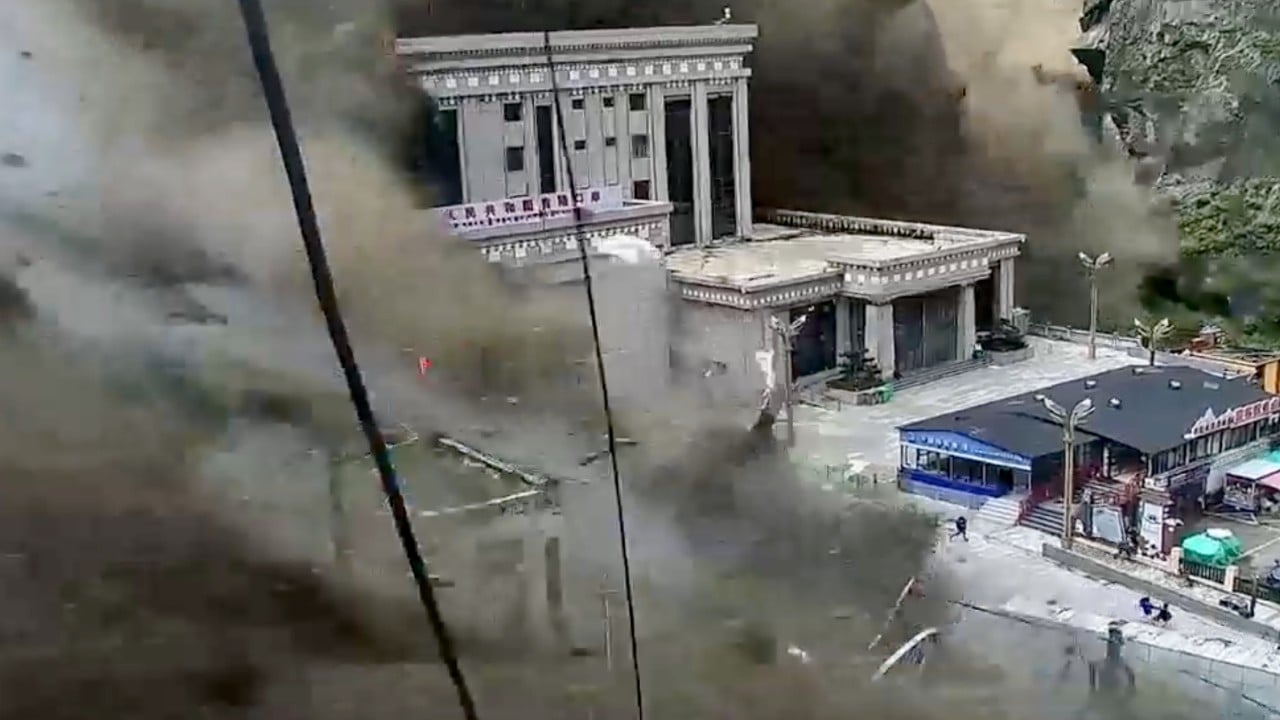
The debris flow that struck the Gyirong Port border checkpoint between China and Nepal moved so quickly that even the world’s fastest sprinters could not have escaped it, researchers said.
A team from the Chinese Academy of Sciences calculated a surface velocity of 19 metres per second, or 62 feet per second, when the flow hit the checkpoint in Tibet. That was almost twice Usain Bolt’s average speed during his 9.58-second 100-metre world record in 2009, and 50% higher than his top speed.
The researchers reconstructed the disaster using digital models and frame-by-frame analysis. Their assessment was published online by the Chinese-language journal Yangtze River and is described as one of the first peer-reviewed studies of the event.
This disaster involved a continuous transition from ice avalanche to debris flow, then to mudslide and finally to flood.
The team said the disaster followed a continuous progression from an ice avalanche to a debris flow, then a mudslide and finally a flood. It began when a high-altitude glacier collapsed in Nepal.
"The time from the occurrence of the ice avalanche to its impact on the Gyirong Port was extremely short, and the effective response time was limited," the researchers wrote. They said the event demanded faster identification, information transmission and emergency decision-making.
The time from the occurrence of the ice avalanche to its impact on the Gyirong Port was extremely short, and the effective response time was limited.
About this summary
Originally published by South China Morning Post in English. Translated, summarized, and contextualized automatically by DistantNews, with a note on how the source frames the story. Not individually reviewed before publishing. How this works.
More Stories
From Our Blog

Countries Without a Free Press: What You Need to Know

What Press Freedom Means for the News You Read

What Gets Lost (and Found) When News Is Translated

The Critical Role of Diaspora Media in Global News

What Travellers Should Know About Countries with Restricted Press
