


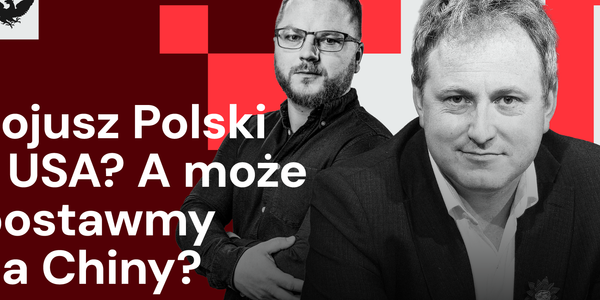
China: Rival or Partner? Poland's Geopolitical Choice Ahead
Translated from Polish, summarized and contextualized by DistantNews.
At a glance
Analysis
Sources not specified
Context piece
- Poland faces a geopolitical choice between China as a rival or partner, requiring adaptation of its industrial policy.
- Europe's reactive approach contrasts with China's long-term strategies, and misunderstandings of the EU's structure lead China to engage directly with member states.
- Key to effective relations is separating political and business matters, identifying common interests like climate change, and protecting critical sectors, while acknowledging differing mentalities.
Poland stands at a geopolitical crossroads, needing to define its relationship with China as either a rival or a partner. This strategic decision demands an alignment of its industrial policy with contemporary global demands.
Europe's approach to China is often reactive, driven by immediate political needs and current challenges. In contrast, China pursues long-term strategies rooted in decades of development plans. This divergence in perspective complicates relations. Kamil Biernat, an expert on China, notes that while Europe may criticize Beijing's tactic of bypassing Brussels to negotiate directly with individual capitals, this often stems from a misunderstanding of the EU's complex, multi-centered institutional structure and its fluctuating electoral system. Chinese entities simply seek pragmatic economic partners.
Biernat emphasizes the importance of finding common ground for dialogue. "The Chinese very much want to understand Europe, but we must also remember that the Chinese way of thinking is completely different from the European one. I am always in favor of simply looking for those points that can allow the two sides to talk," he stated. Effective engagement requires separating political issues from business interests and identifying shared areas, such as climate change and energy transformation, while simultaneously safeguarding critical sectors.
Growing concerns over import pressure and unfair international competition have led the European Council to adopt a tougher stance, aiming to reduce key trade dependencies. State subsidies for Chinese companies are a particular flashpoint, viewed from Europe as distorting free market principles. However, from the perspective of Chinese businesses, state support is a natural and necessary phase for scaling up production in strategic sectors like electromobility and advanced technologies. The issue of uneven support is also present within the EU itself, with substantial public aid in major economies like Germany and France creating a dual challenge for smaller member states competing with both China and larger EU economies.
The Chinese very much want to understand Europe, but we must also remember that the Chinese way of thinking is completely different from the European one. I am always in favor of simply looking for those points that can allow the two sides to talk.
DistantNews Editorial
Originally published by Rzeczpospolita in Polish. Translated, summarized, and contextualized by our editorial team with added local perspective. Read our editorial standards.
More Stories


From Our Blog

What Gets Lost (and Found) When News Is Translated

The Critical Role of Diaspora Media in Global News

What Travellers Should Know About Countries with Restricted Press

A Digital Nomad's Guide to Following Local News

How the Same Story Looks Different in Different Countries
