


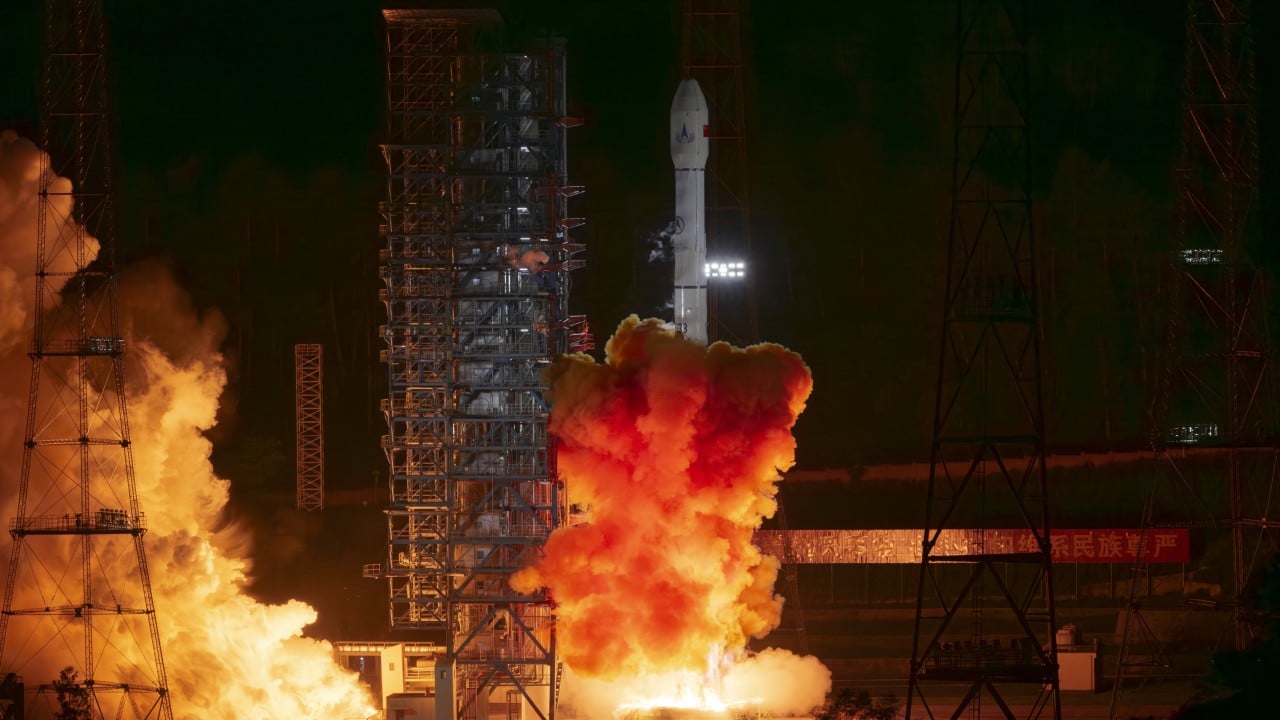
China's Asteroid Hunter Finds Target Is Smaller Than Expected, Posing New Challenges
Translated from English, summarized and contextualized by DistantNews.
At a glance
News
Official statement
Context piece
- China's Tianwen-2 spacecraft captured its first close-up image of asteroid 2016 HO3.
- The image reveals the asteroid is smaller than anticipated, complicating sample-return missions.
- Scientists estimate the asteroid's diameter to be less than 40 meters, significantly smaller than previous targets.
China's Tianwen-2 spacecraft has captured its first close-up image of the near-Earth asteroid 2016 HO3, revealing it to be significantly smaller than previously estimated. This discovery presents a new challenge for the mission's sample-return objective, which scientists now anticipate will be far more difficult than earlier Japanese and American missions. The China National Space Administration released the imagery, taken from approximately 20 kilometers away on July 2, 2026. Formally designated 2016 HO3, or asteroid 469219 Kamo‘oalewa, the target was initially thought to measure between 40 to 100 meters in diameter. However, the new image and its accompanying scale bar suggest a diameter of less than 40 meters, making it considerably smaller than Ryugu and Bennu, which measured about 900 meters and 500 meters respectively. Zhang Pengfei, a researcher from the Institute of Geochemistry at the Chinese Academy of Sciences, noted that the asteroid appears to be only about 20 to 30 meters across, a stark contrast to the earlier estimate of 57 meters.
Based on the image released so far, this asteroid appears to be somewhat smaller than previously predicted – it seems to be only about 20 to 30 metres across, whereas the earlier estimate from our paper was around 57 metres.
DistantNews Editorial
Originally published by South China Morning Post in English. Translated, summarized, and contextualized by our editorial team with added local perspective. Read our editorial standards.
More Stories


From Our Blog

Countries Without a Free Press: What You Need to Know

What Press Freedom Means for the News You Read

What Gets Lost (and Found) When News Is Translated

The Critical Role of Diaspora Media in Global News

What Travellers Should Know About Countries with Restricted Press
