


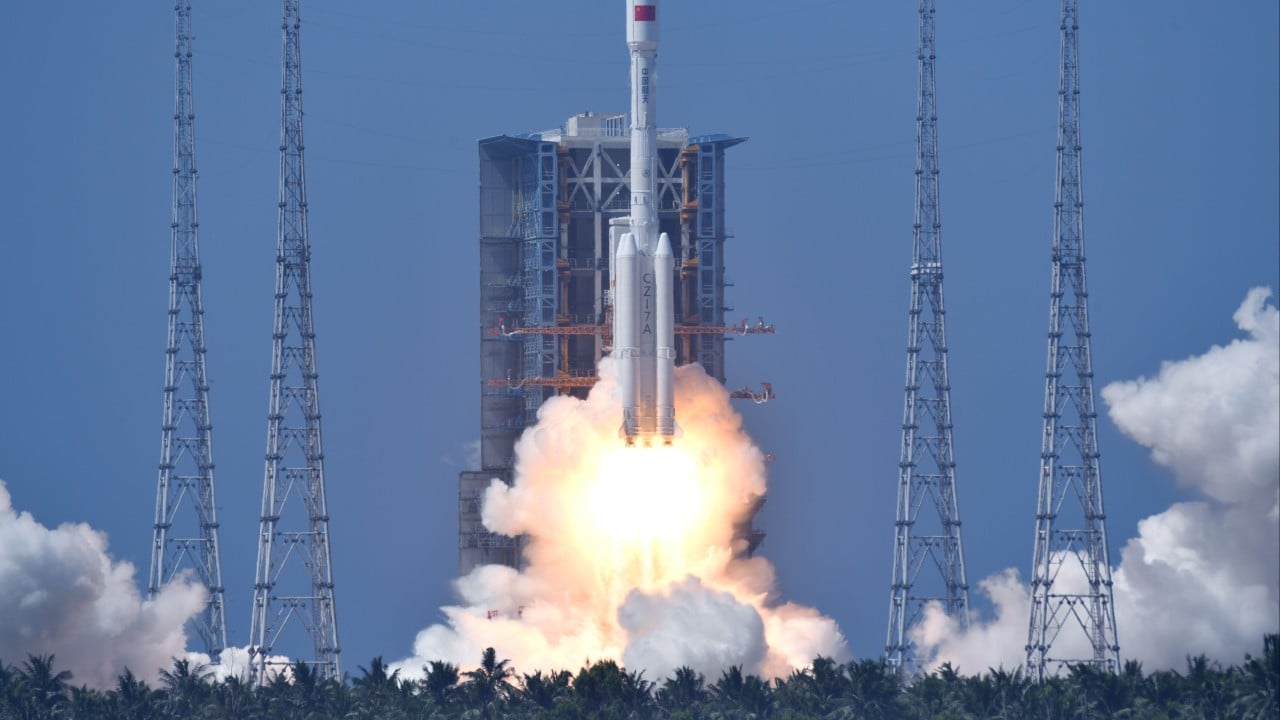
China's satellite engine smashes record, leaves US rival far behind
Translated from English, summarized and contextualized by DistantNews.
At a glance
News
Sources not specified
Context piece
- China has successfully tested a satellite engine with a record-breaking operating life, significantly surpassing U.S. and European counterparts.
- The upgraded engine produced 750 newtons of thrust and operated for over 14 hours during testing, far exceeding its design goal.
- This advancement in engine technology could enhance the speed and reliability of spacecraft deployment for communications, military, and deep-space missions.
China has achieved a significant milestone in space technology with the successful test of a satellite engine boasting a record-breaking operating life. Developed by the China Academy of Aerospace Propulsion Technology in Xian, the upgraded engine is capable of producing 750 newtons of thrust.
During its maiden flight in late June, the engine fired for 11,617 seconds, or 3.2 hours, across five orbit-raising maneuvers, successfully placing the Communications Technology Experiment Satellite 26A into its intended orbit approximately 35,800 kilometers above Earth. More impressively, during ground testing, the engine operated continuously for over 14 hours, far exceeding its design specification of nearly 10 hours.
This extended operational capability is attributed to a novel heat- and oxidation-resistant coating. In comparison, leading engines used for similar orbital maneuvers, such as the U.S.-made R-42DM and Europe's Leros-1B, are typically designed for about seven hours of operation.
The enhanced operating time has not come at the expense of performance, according to reports. This technological leap could significantly improve the speed and reliability of deploying the world's largest communications, military, and deep-space spacecraft into their intended orbits, potentially giving China a competitive edge in space exploration and utilization.
DistantNews Editorial
Originally published by South China Morning Post in English. Translated, summarized, and contextualized by our editorial team with added local perspective. Read our editorial standards.
More Stories



From Our Blog

Countries Without a Free Press: What You Need to Know

What Press Freedom Means for the News You Read

What Gets Lost (and Found) When News Is Translated

The Critical Role of Diaspora Media in Global News

What Travellers Should Know About Countries with Restricted Press
