


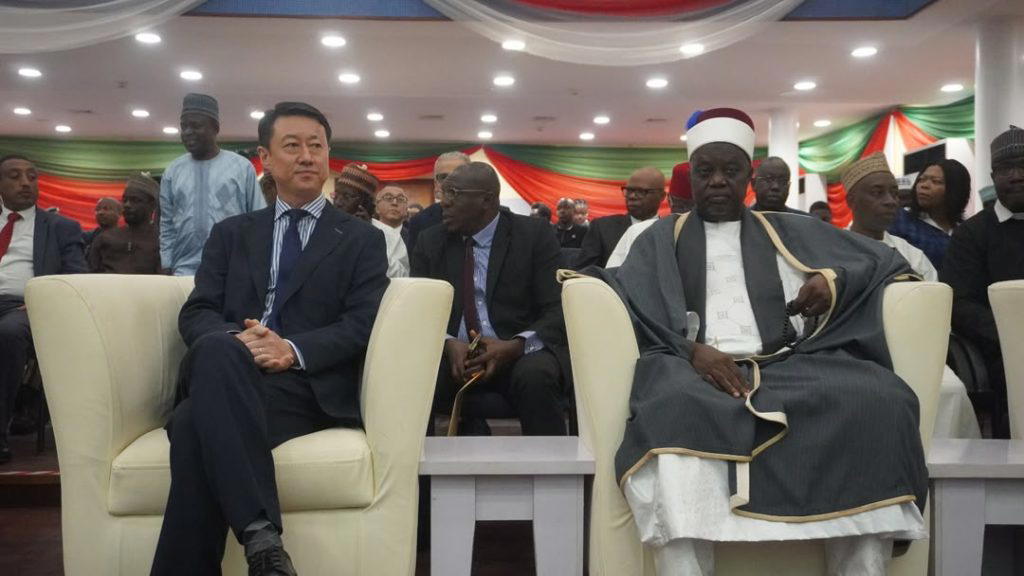
China's zero-tariff policy boosts Nigeria's exports, industrial growth, ambassador says
Translated from English, summarized and contextualized by DistantNews.
At a glance
News
Named sources
New plan
- China's zero-tariff policy for African nations, implemented in May 2026, is significantly boosting Nigeria's exports and industrial growth.
- Bilateral trade between China and Nigeria reached $18 billion in the first half of 2026, with Chinese imports from Nigeria increasing by 80%.
- The policy aims to reduce export costs, support industrial development, and encourage local processing and job creation in Nigeria and across Africa.
China's Ambassador to Nigeria, Yu Dunhai, announced that the country's zero-tariff policy for African nations is already yielding substantial benefits for Nigeria. Implemented on May 1, 2026, the initiative has led to significant growth in bilateral trade and Nigerian exports within months.
Yu highlighted that the policy, a commitment following Chinese President Xi Jinping's February announcement, grants zero-tariff treatment to all 53 African countries with diplomatic ties. This has propelled China-Africa trade to a record $207 billion in the first half of 2026. Chinese imports from Africa surged by 24% between May and June alone.
Nigeria has emerged as a major beneficiary. Bilateral trade hit $18 billion in the first half of 2026, a 35% increase from the same period in 2025. Notably, Chinese imports from Nigeria rose by an impressive 80% to $2.3 billion during this period. The ambassador cited savings on exports like sesame, cattle bone granules, and liquefied propane as examples of reduced export costs for Nigerian businesses.
China’s zero-tariff policy is a long-term strategic commitment rooted in mutual respect and shared benefits.
The policy is also fostering local processing, creating employment opportunities, and stimulating growth in logistics, warehousing, and transportation sectors. "China's zero-tariff policy is a long-term strategic commitment rooted in mutual respect and shared benefits," Yu stated, assuring continued support from the Chinese Embassy to facilitate market access for Nigerian products.
Nigeria's Minister of Foreign Affairs, represented by Permanent Secretary Dr. Dunoma Umar Ahmed, acknowledged the policy as a crucial opportunity for deepening industrialization. The government aims to attract investments that build manufacturing capacity, generate jobs, and develop industrial value chains, moving beyond an economy reliant on unprocessed commodities. However, the minister cautioned that preferential market access would be less impactful if African nations continue exporting raw materials while importing finished goods, emphasizing the need for factories, technology transfer, and local supplier development.
The President has consistently emphasised that Nigeria must move beyond an economic model that relies predominantly on the export of unprocessed commodities.
DistantNews Editorial
Originally published by Vanguard in English. Translated, summarized, and contextualized by our editorial team with added local perspective. Read our editorial standards.
More Stories


From Our Blog

How the Same Story Looks Different in Different Countries

What Gets Lost (and Found) When News Is Translated

The Critical Role of Diaspora Media in Global News

What Travellers Should Know About Countries with Restricted Press

A Digital Nomad's Guide to Following Local News
