


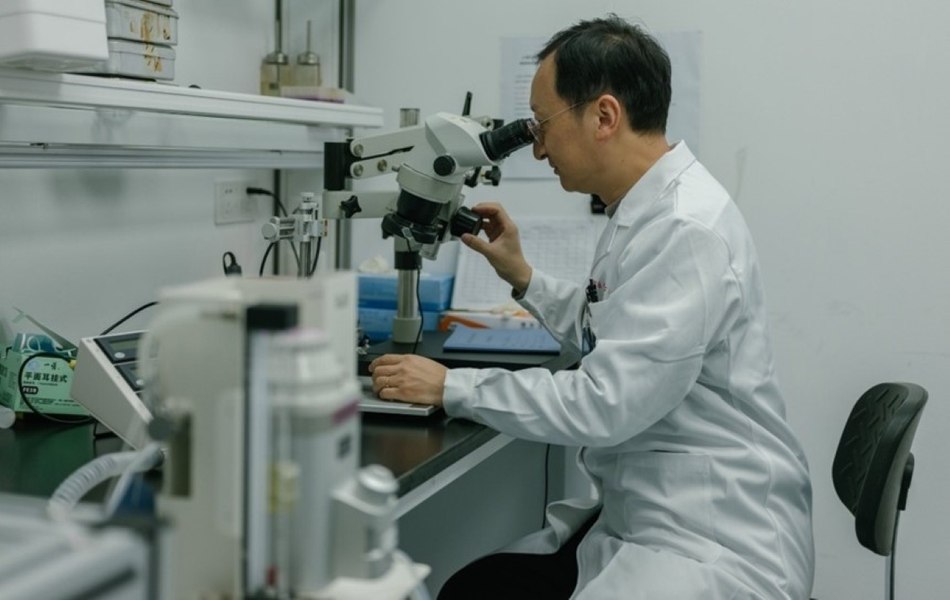
China University Investigates Girl's Death After Experimental Gene Therapy
Translated from Romanian, summarized and contextualized by DistantNews.
At a glance
News
Named sources
Under investigation
- A Chinese university is investigating the death of a six-year-old girl following an experimental gene therapy.
- The girl's parents paid over $800,000 for the treatment, which aimed to correct a genetic mutation causing developmental delays.
- The death was not disclosed in a subsequent scientific study, prompting concerns about researchers minimizing risks.
Shanghai's Jiao Tong University School of Medicine is investigating the death of a six-year-old girl who received an experimental gene therapy. The treatment, funded by her parents at a cost exceeding $800,000, aimed to correct a genetic mutation causing cognitive development delays.
The university is investigating the death of a six-year-old girl after an experimental gene therapy funded by the child's parents with over $800,000.
The girl, identified by the pseudonym Mei, underwent the experimental therapy in 2025. The procedure involved introducing large quantities of genetically modified viral vectors into her cerebrospinal fluid to reach the brain. Approximately one week after the treatment, she died from a severe immune reaction associated with the therapy, according to reports citing an investigation by Science and Retraction Watch.
The research was led by neuroscientist Zilong Qiu, who was developing one of the first gene-editing therapies for the brain. The goal was to rewrite a faulty gene in neurons, enabling cells to produce an essential protein. Qiu published an article in Nature about related animal research but did not mention the girl's death or the treatment's outcome.
The girl died from a severe immune reaction associated with the therapy.
Official documents and parents' statements indicate the hospital proceeded with the experiment under a provision that did not require national regulatory approval. Following the child's death, the medical unit received a fine from a local health authority, but the lead researcher faced no public sanctions. Experts consulted by Science and Retraction Watch questioned how Qiu's team presented the treatment's risks to the parents, suggesting they may have downplayed dangers and overlooked warning signs from animal studies.
Researchers had minimized the dangers of the procedure and had not paid enough attention to signals that appeared in animal studies.
DistantNews Editorial
Originally published by Adevărul in Romanian. Translated, summarized, and contextualized by our editorial team with added local perspective. Read our editorial standards.
More Stories



From Our Blog

What Gets Lost (and Found) When News Is Translated

The Critical Role of Diaspora Media in Global News

What Travellers Should Know About Countries with Restricted Press

A Digital Nomad's Guide to Following Local News

How the Same Story Looks Different in Different Countries
