


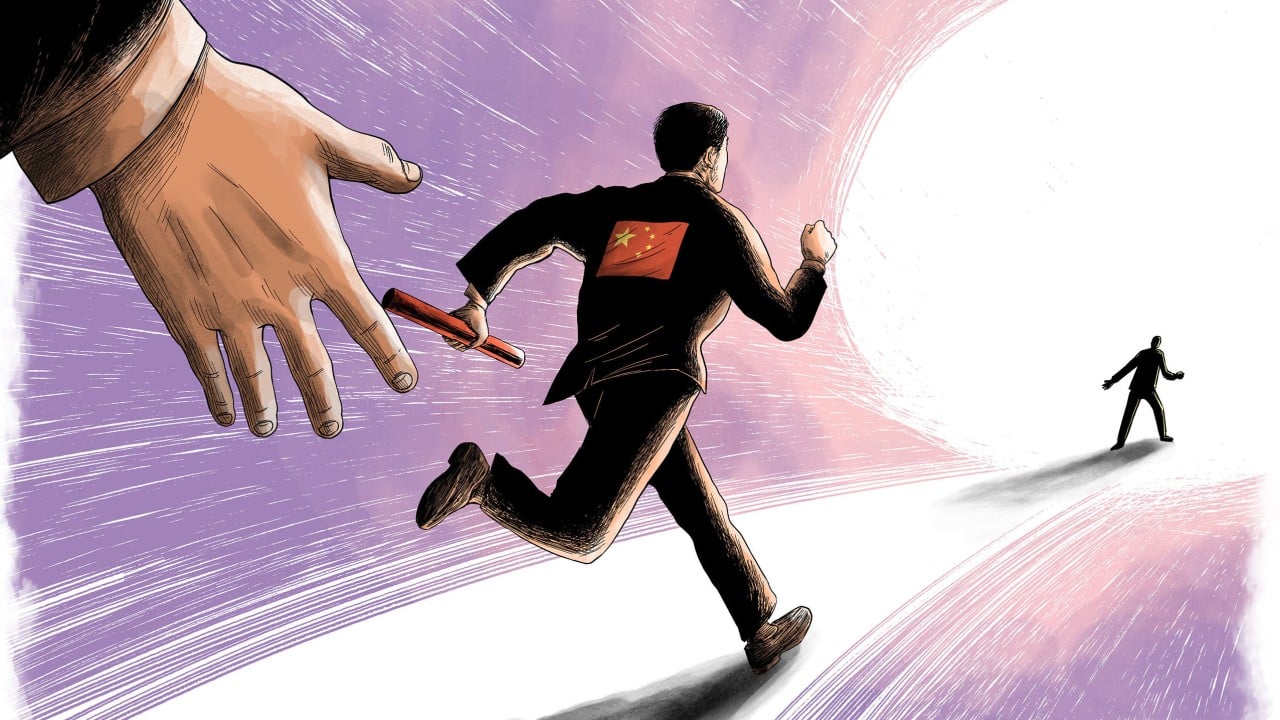
China uses Jiang Zemin centenary to signal political continuity
Translated from English, summarized and contextualized by DistantNews.
At a glance
Analysis
Sources not specified
Context piece
- China commemorated the centenary of former leader Jiang Zemin's birth, using the event to signal political continuity and reaffirm his legacy.
- President Xi Jinping highlighted Jiang's contributions to reform, opening up, and the "Three Represents" theory, placing him within the party's historical leadership chain.
- The commemoration underscores Beijing's view of historical continuity as crucial for understanding China's modernization from reform to its current global economic role.
China marked the 100th anniversary of former leader Jiang Zemin's birth on August 17 with a memorial in Beijing, an event that served a dual purpose: commemorating a past leader and signaling political continuity. President Xi Jinping addressed the gathering, framing Jiang's legacy within the broader narrative of the Communist Party of China's evolution and the nation's modernization.
The significance of the commemoration lies not just in honoring Jiang, but in the leadership's deliberate choice to reaffirm his place in the country's political story at this particular moment. This serves to illustrate Beijing's perspective on the path from the reform and opening-up era to contemporary Chinese modernization.
It was also an exercise in political history: a moment to locate Jiang, the era he led and the reform legacy associated with him within the broader story of the Communist Party of China’s evolution and China’s modernisation.
Xi's speech positioned Jiang as a central figure in the party's third-generation leadership and a key proponent of the "Three Represents" theory. The address emphasized Jiang's crucial role in advancing reform and opening up, socialist modernization, and China's overall development. By formulating Jiang's contributions in this manner, the leadership presented him not as an isolated figure but as an integral part of a continuous line of political leadership and national progress spanning decades.
For China's current leadership, maintaining a sense of historical continuity is politically vital. The reform era was characterized by successive experiments and adjustments under different leaders. Jiang's tenure, particularly in the 1990s and early 2000s, witnessed profound transformations, including the consolidation of the socialist market economy, accelerated globalization, the development of Pudong, state-owned enterprise restructuring, and China's accession to the World Trade Organization. These developments fundamentally reshaped China's engagement with the global economy, transitioning it from a peripheral player to a central manufacturing and trading power.
It places him within a chain of political leadership and national development stretching across several decades.
DistantNews Editorial
Originally published by South China Morning Post in English. Translated, summarized, and contextualized by our editorial team with added local perspective. Read our editorial standards.
More Stories

From Our Blog

Countries Without a Free Press: What You Need to Know

What Press Freedom Means for the News You Read

What Gets Lost (and Found) When News Is Translated

The Critical Role of Diaspora Media in Global News

What Travellers Should Know About Countries with Restricted Press
