


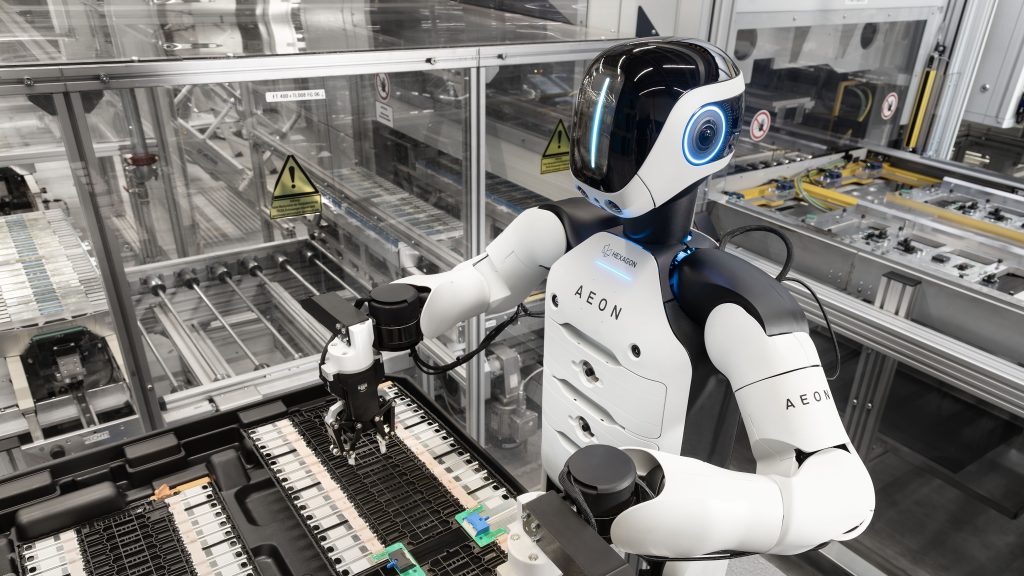
Chinese humanoid robots pass six-day factory challenge
Translated from French, summarized and contextualized by DistantNews.
At a glance
In-depth
Named sources
Outcome reported
- Chinese humanoid robots completed a six-day continuous work marathon in a real factory in Nanchang, China.
- The robots performed quality inspection and handled electronic components, achieving a near-perfect success rate over 64 hours.
- This achievement marks a significant step toward the commercial integration of embodied artificial intelligence in global manufacturing.
A team of Chinese humanoid robots has successfully completed an unprecedented six-day industrial marathon in a functioning factory in Nanchang, China. Developed by Shanghai-based Agibot, these advanced robots maintained an uninterrupted work pace for over 64 hours, performing tasks such as quality inspection and the manipulation of electronic components. The demonstration, broadcast live online, saw the robots successfully complete more than 60,000 production missions, showcasing their operational viability in a real-world industrial setting.
This rigorous test aimed to evaluate the machines' robustness against the unpredictable challenges of an authentic manufacturing environment. Dr. Yao Maocheng, senior vice president at Agibot, highlighted the shift from mere technical demonstrations to proving practical economic value. "The challenge is no longer to demonstrate the robots' capabilities, but to prove their stability within production lines to generate real economic value for factories," he stated. Agibot also announced it has produced over 15,000 units, underscoring its growing manufacturing capacity.
The achievement aligns with China's strategic goals outlined in its 2026-2030 five-year plan, which prioritizes humanoid robotics as a key industrial sector. Experts note China's transition from rigid automation to more intelligent, flexible systems. Financial projections are optimistic, with Barclays analysts predicting the deployment of nearly 11 million humanoid robots in China by 2035. However, Morgan Stanley data indicates the market is still in its early stages, with approximately 12,000 units sold last year, suggesting a significant gap remains before widespread adoption.
DistantNews Editorial
Originally published by El Watan in French. Translated, summarized, and contextualized by our editorial team with added local perspective. Read our editorial standards.
More Stories



From Our Blog

What Gets Lost (and Found) When News Is Translated

The Critical Role of Diaspora Media in Global News

What Travellers Should Know About Countries with Restricted Press

A Digital Nomad's Guide to Following Local News

How the Same Story Looks Different in Different Countries
