

Climate-fueled landslides kill nearly 10% of world's rarest great ape, study finds
Translated from Spanish, summarized and contextualized by DistantNews.
At a glance
News
Named sources
New plan
- Climate change-fueled landslides killed nearly 10% of the world's rarest great ape, the Tapanuli orangutan, on Indonesia's Sumatra island.
- A single weather event in November decimated the critically endangered species, with fewer than 800 remaining in the wild.
- Scientists urge Indonesia to permanently protect the Batang Toru ecosystem and call on international partners to fund biodiversity restoration.
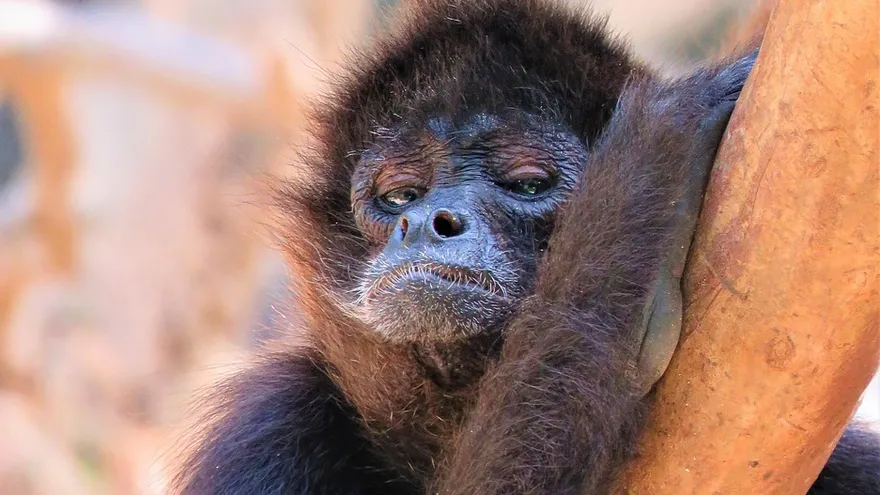
Climate change has devastated the world's rarest great ape, with landslides wiping out nearly a tenth of the Tapanuli orangutan population on Indonesia's Sumatra island, scientists reported Wednesday. A single severe weather event in November caused devastating landslides, killing an estimated 58 Tapanuli orangutans. This represents about 11% of the population in the affected region and 7% of the total estimated wild population, which numbers fewer than 800 individuals. The Tapanuli orangutan, found only in a small area of Sumatra, is critically endangered. The recent floods not only killed the apes but also destroyed their food sources and habitats. Scientists analyzed satellite imagery after the landslides in the Batang Toru ecosystem, the apes' primary habitat, and found that over 11% of the area, approximately 8,300 hectares, was affected. "This level of loss is considerable for a species whose total population is so low," said Erik Meijaard, chief scientist at Borneo Futures, an environmental NGO. Jatna Supriatna, a researcher at the University of Indonesia, stated, "The estimated loss of 58 Tapanuli orangutans during a single climate-induced landslide event constitutes a devastating demographic shock for the world's rarest great ape." Ecologists have long campaigned against industrial activities in Batang Toru, including a hydroelectric dam and a gold mine, arguing that the orangutans are forced to live in suboptimal conditions due to human development. Supriatna stressed the urgent need for permanent protection of the Batang Toru ecosystem to prevent the first modern extinction of a great ape species. He also called on international partners to fulfill their commitments to immediate funding for biodiversity restoration.
This level of loss is considerable for a species whose total population is so low.
DistantNews Editorial
Originally published by TVN Panamá in Spanish. Translated, summarized, and contextualized by our editorial team with added local perspective. Read our editorial standards.
More Stories

From Our Blog

What Gets Lost (and Found) When News Is Translated

The Critical Role of Diaspora Media in Global News

What Travellers Should Know About Countries with Restricted Press

A Digital Nomad's Guide to Following Local News

How the Same Story Looks Different in Different Countries
