

Panama trains community leaders to boost amphibian and reptile conservation
Translated from Spanish, summarized and contextualized by DistantNews.
At a glance
News
Sources not specified
New plan
- Fifty community environmental leaders in Chiriquí, Panama, received training on amphibian and reptile conservation.
- The training, led by experts from the Ministry of Environment and the Autonomous University of Chiriquí, focused on biodiversity protection and climate change effects.
- This initiative aims to empower local leaders to promote environmental best practices and raise awareness about protecting these crucial species.
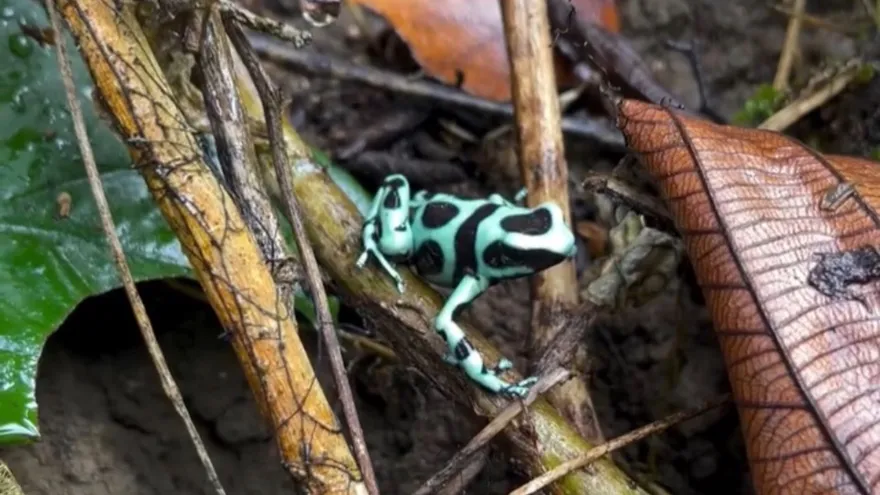
Fifty environmental leaders from Chiriquí province, Panama, recently participated in a training session organized by the Ministry of Environment (MiAmbiente). The workshop focused on conserving amphibians and reptiles, species vital for ecosystem balance and environmental health.
The initiative, led by herpetologist Michelle Quiroz and community environmental management advisor Estefanie Barrios, brought together representatives from various districts. Participants learned about amphibian and reptile conservation, the impacts of climate change, and community organization. The goal was to equip these leaders with the knowledge to act as environmental advocates and knowledge multipliers in their communities.
Amphibians and reptiles play an essential role within ecosystems, as they contribute to the biological control of various species and function as indicators of environmental quality.
Quiroz emphasized the essential role amphibians and reptiles play in ecosystems, including biological pest control and serving as indicators of environmental quality. She also highlighted the importance of citizen science and community workshops to foster greater awareness for these species in both urban and rural areas.
MiAmbiente stated that these training activities are part of a broader strategy to enhance citizen participation in conserving Panama's natural resources and biodiversity. The ministry reaffirmed its commitment to ongoing environmental education programs that promote sustainable practices and strengthen community leadership for protecting the nation's natural heritage.
These types of activities are part of a strategy aimed at strengthening citizen participation in the conservation of the country's natural resources and biodiversity.
DistantNews Editorial
Originally published by TVN Panamá in Spanish. Translated, summarized, and contextualized by our editorial team with added local perspective. Read our editorial standards.
More Stories
From Our Blog

What Gets Lost (and Found) When News Is Translated

The Critical Role of Diaspora Media in Global News

What Travellers Should Know About Countries with Restricted Press

A Digital Nomad's Guide to Following Local News

How the Same Story Looks Different in Different Countries
