


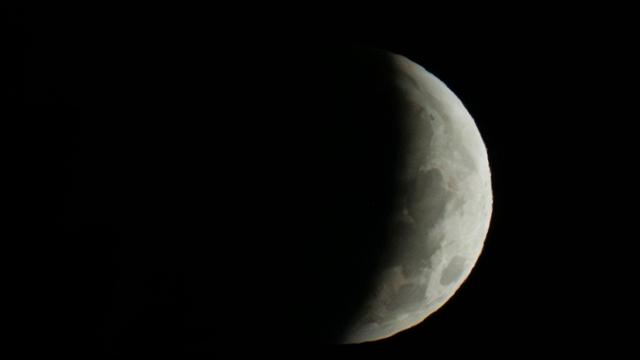
Clouds obscure lunar eclipse in parts of Bavaria
Translated from German and summarized by DistantNews. Read the original for the full story.
At a glance
News
From a news agency
Outcome reported
- A partial lunar eclipse was visible in Bavaria on Friday morning, but clouds and haze obscured the view in some areas.
- The celestial event began at 4:34 a.m. when the moon entered Earth's umbra, with the best views in Munich through cloud breaks.
- Future lunar events include a penumbral eclipse on February 21 and a total lunar eclipse on December 31, 2028.
Residents of Bavaria had a mixed experience witnessing a partial lunar eclipse early Friday morning, with clear skies in some areas and cloud cover in others.
The celestial spectacle began at 4:34 a.m. as the moon entered the Earth's umbra. While the southern regions of Bavaria contended with morning haze, the northern area of Franconia faced significant cloud obstruction. However, those in Munich were able to catch a good view of the eclipse through breaks in the clouds.
As the moon's obscuration increased, the morning dawn also began. This event follows a solar eclipse observed across much of Europe on August 12. For those who missed this event, another penumbral lunar eclipse is scheduled for the night of February 21 next year, though the darkening effect is typically very faint. A total lunar eclipse will not occur again until December 31, 2028.
During a lunar eclipse, the Earth positions itself between the sun and the moon, casting a shadow on the moon. This phenomenon does not require special protective eyewear, unlike a solar eclipse, as the light reflected by the moon is too weak. The moon appeared particularly large due to the "moon illusion," an optical effect where the moon seems larger when viewed in relation to terrestrial objects on the horizon, such as buildings or mountains.
About this summary
Originally published by Die Zeit in German. Translated, summarized, and contextualized automatically by DistantNews, with a note on how the source frames the story. Not individually reviewed before publishing. How this works.
More Stories



From Our Blog

What Gets Lost (and Found) When News Is Translated

How the Same Story Looks Different in Different Countries

The Critical Role of Diaspora Media in Global News

What Travellers Should Know About Countries with Restricted Press

A Digital Nomad's Guide to Following Local News
