


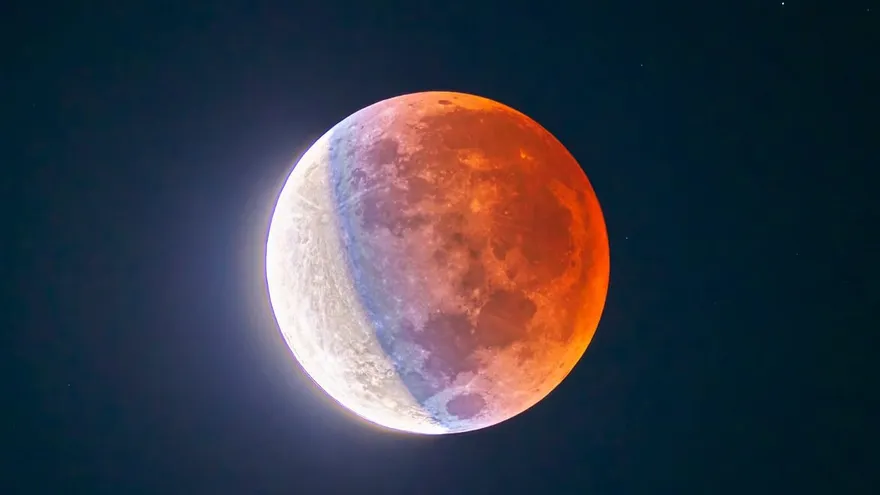
Cloudy Skies Obscure Lunar Eclipse Viewing in Panama
Translated from Spanish and summarized by DistantNews. Read the original for the full story.
At a glance
News
Sources not specified
Context piece
- Cloudy weather across Panama thwarted public viewing of the anticipated lunar eclipse.
- The partial phase was scheduled to begin at 9:34 p.m., with the moon expected to develop a reddish hue around 11:13 p.m.
- The University of Technology of Panama's astronomical observatory canceled its planned observation event due to the poor weather conditions.
Residents across Panama were left disappointed as thick cloud cover obscured the skies, preventing them from witnessing the month's most anticipated astronomical event: a lunar eclipse. The celestial phenomenon was set to begin its partial phase at 9:34 p.m., when the Earth's shadow would gradually start to cover the moon's disk.
The peak of the eclipse, when the moon was expected to take on its characteristic reddish hue, was anticipated around 11:13 p.m. However, unfavorable weather conditions proved to be the main obstacle for enthusiasts hoping to enjoy the spectacle. Despite the astronomical significance, the persistent cloudiness meant the moon remained hidden from view for most of the country.
At the University of Technology of Panama's (UTP) astronomical observatory in Llano Marín, Penonomé, plans for a public observation event, organized in collaboration with the Astro Club Estela Nova, had to be canceled. Rodney Delgado, director of Space Sciences at UTP, had previously explained that while the eclipse would not be total from Panama, approximately 93% of the lunar disk was expected to be covered. The anticipation for the reddish hue phase was particularly high among amateur astronomers.
In response to the widespread disappointment, the UTP's Astronomical Observatory of Panama is maintaining its digital channels as an alternative for those seeking information and updates on the event. Details and follow-up information can be accessed via their Instagram account, @oaputp.
About this summary
Originally published by TVN Panamá in Spanish. Translated, summarized, and contextualized automatically by DistantNews, with a note on how the source frames the story. Not individually reviewed before publishing. How this works.
More Stories

From Our Blog

What Gets Lost (and Found) When News Is Translated

The Critical Role of Diaspora Media in Global News

What Travellers Should Know About Countries with Restricted Press

A Digital Nomad's Guide to Following Local News

How the Same Story Looks Different in Different Countries
