


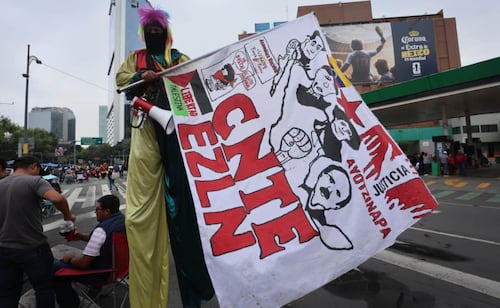
CNTE says Usicamm abolition insufficient; warns protest will be reinforced
Translated from Spanish, summarized and contextualized by DistantNews.
At a glance
News
Sources not specified
Ongoing story
- The National Union of Education Workers (CNTE) in Mexico states that the federal government's proposal to abolish the Usicamm system is insufficient.
- CNTE demands a fundamental reform, not just the dissolution of Usicamm, and plans to reinforce its ongoing protest camp.
- Key demands include abrogating the 2007 ISSSTE general law, a salary increase, reinstating teachers in Jalisco, and guaranteeing dignified pensions.
Members of Mexico's National Union of Education Workers (CNTE) are escalating their protest, declaring the federal government's plan to eliminate the Usicamm system inadequate. They argue that this move does not fulfill their core demands and that a "fundamental reform" is necessary, not just a superficial change.
Usicamm continues to be a system of total bureaucracy for the entry and promotion of colleagues, but what we need is a fundamental reform, not just that they tell us in discourse that Usicamm is finally disappearing, as if it were something new, as if it surprised us… …that does not satisfy us, that is why we call on all colleagues to reinforce the protest camp.
"Usicamm continues to be a system of total bureaucracy for the entry and promotion of colleagues, but what we need is a fundamental reform," stated Elvira Veleces Morales, general secretary of CNTE's Section XIV. She added that simply announcing the dissolution of Usicamm is not surprising and does not satisfy their needs, calling for a reinforcement of their protest camp, which began on June 1.
The union's broader demands include abrogating the 2007 general law of the ISSSTE, a law that CNTE points out was a campaign promise of the President. They are also seeking a direct increase to the base salary for teachers, criticizing the proposed 9% raise as insufficient given inflation, amounting to only about $20 daily. Furthermore, CNTE is pushing for the reinstatement of teachers in Jalisco and the guarantee of dignified retirement, noting that over 74% of teachers are currently in individual accounts, which they view as a form of "self-pension" that benefits financial institutions at the expense of workers.
The 9% that they now offer us as if it were a great achievement, really reflects 224 pesos directly in the salary of the colleagues, but inflation continues, so it is really $20 daily that is reflected in the salary of the colleagues.
Veleces Morales also expressed concern over the "criminalization" of their movement, comparing it to how other sectors like mothers searching for missing persons or farmers are sometimes dismissed as "just a few" or accused of working for criminal organizations. She lamented that the government's approach is to label them rather than address their legitimate grievances.
It is lamentable that the movement's struggle is beginning to be criminalized.
DistantNews Editorial
Originally published by El Universal in Spanish. Translated, summarized, and contextualized by our editorial team with added local perspective. Read our editorial standards.
More Stories

From Our Blog

What Press Freedom Means for the News You Read

What Gets Lost (and Found) When News Is Translated

The Critical Role of Diaspora Media in Global News

What Travellers Should Know About Countries with Restricted Press

A Digital Nomad's Guide to Following Local News
