


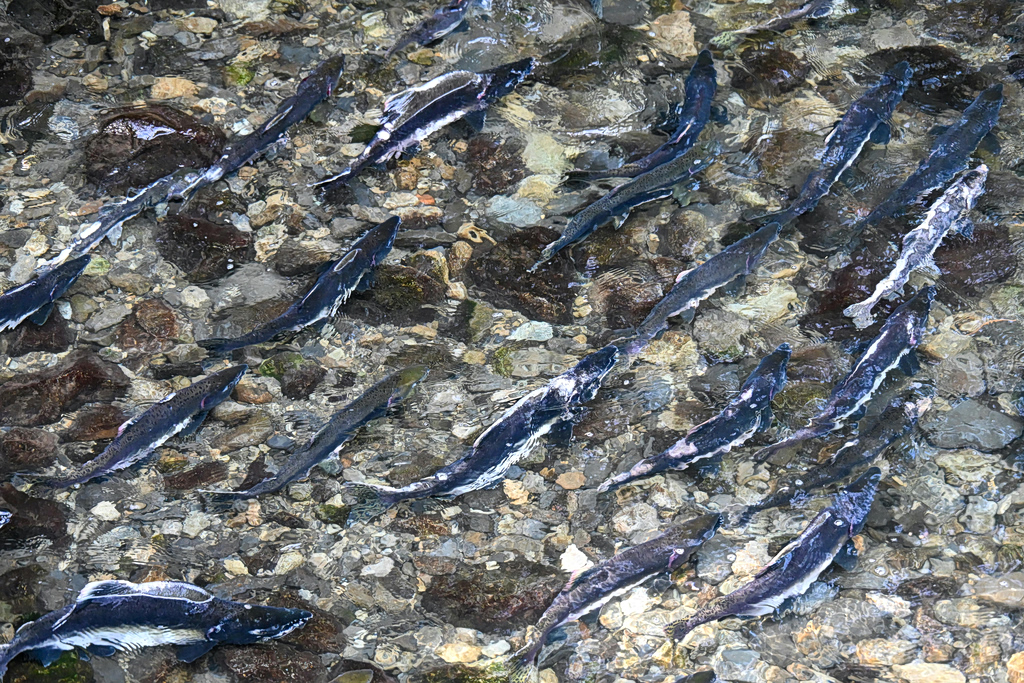
Cocaine-Addicted' Salmon Transform into Active Swimmers, Study Finds
Translated from Greek, summarized and contextualized by DistantNews.
TLDR
- Researchers warn that traces of cocaine in rivers and lakes may accumulate in salmon brains, altering their behavior.
- Young Atlantic salmon exposed to cocaine swam more and dispersed more widely, suggesting impacts on movement, feeding, and predator vulnerability.
- Scientists are concerned about unknown consequences for fish ecosystems, as cocaine pollution is an emerging environmental risk.
A concerning new study reveals that cocaine pollution in aquatic environments may be having a significant impact on salmon populations. Researchers have found that traces of cocaine can accumulate in the brains of salmon, leading to altered behaviors. This discovery raises alarms about the broader ecological consequences of pharmaceutical pollution in our waterways.
The study specifically observed that young Atlantic salmon exposed to cocaine exhibited increased swimming activity and wider dispersal in a lake. These behavioral changes suggest that the drug could be affecting crucial aspects of the salmon's life, including their migration patterns, foraging habits, and susceptibility to predators. The long-term implications for fish populations and the aquatic food web remain largely unknown, prompting urgent calls for further investigation.
To a large extent, we do not know the consequences, but I expect there will be trade-offs.
Scientists involved in the research express worry about the cumulative effects of such pollutants. While the exact impact is still being studied, it is anticipated that affected fish may expend more energy or face increased risks while searching for food. This situation highlights a growing concern about the 'silent invasion' of pharmaceuticals into natural ecosystems and the potential for unforeseen harm to biodiversity. The findings underscore the need for stricter regulations on pharmaceutical waste and the development of more environmentally friendly drug formulations.
They may be in worse physical condition or need to search for more food, thus spending more time exposed.
DistantNews Editorial
Originally published by Ta Nea in Greek. Translated, summarized, and contextualized by our editorial team with added local perspective. Read our editorial standards.
More Stories



From Our Blog

What Gets Lost (and Found) When News Is Translated

The Critical Role of Diaspora Media in Global News

What Travellers Should Know About Countries with Restricted Press

A Digital Nomad's Guide to Following Local News

How the Same Story Looks Different in Different Countries
