


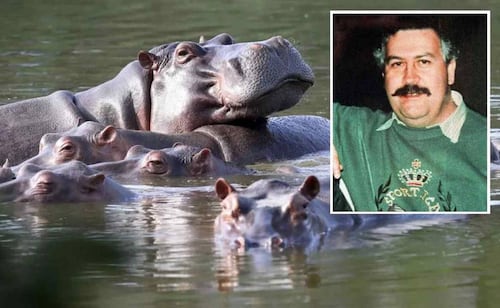
Colombia to euthanize invasive hippos descended from Pablo Escobar's zoo
Translated from Spanish, summarized and contextualized by DistantNews.
TLDR
- Colombia will euthanize at least 80 invasive hippos descended from Pablo Escobar's private zoo to manage the environmental and security threat they pose.
- The decision follows failed attempts to relocate the animals, with governments in other countries not issuing necessary permits.
- The hippos, now numbering around 200, are considered dangerous to humans and are impacting local ecosystems.
What began as an eccentric indulgence by drug lord Pablo Escobar has morphed into a significant environmental and security crisis for Colombia. The introduction of four hippos to his private zoo three decades ago has resulted in an uncontrolled population boom, with the animals now posing a tangible danger to both ecosystems and human communities in the country's central region.
The Colombian government has finally taken decisive action, announcing a plan to euthanize at least 80 of these invasive hippos in the latter half of the year. This difficult decision, described by Environment Minister Irene Vélez as a necessary measure to "save our ecosystems," comes after scientific recommendations and the failure of international relocation efforts. The sheer scale of the problem, with a population estimated at nearly 200, necessitates such drastic measures.
The chosen method involves both physical and chemical euthanasia, beginning with the capture and sedation of the animals. These procedures will be carried out on hippos primarily located at Hacienda Nápoles, Escobar's former estate, and the nearby Isla del Silencio. However, the plan is not limited to these areas, as interventions are also being considered in other regions where the hippos have been sighted, underscoring the widespread nature of the infestation.
The hippos' aggressive territorial nature and immense size make them a significant threat to local populations, particularly farmers and fishermen along the Magdalena River. The failure to secure CITES permits for relocation to countries like Mexico, the Philippines, and South Africa highlights the complexities of managing invasive species across international borders. Furthermore, the article notes a "genetic poverty" due to inbreeding, leading to visible genetic damage in some individuals, adding another layer to the ecological concern. This situation is a stark reminder of the unintended and long-lasting consequences of introducing non-native species, a legacy of Escobar's violent past that continues to impact Colombia.
Since 2022, science has told us that we must reduce the population (of hippos) to save our ecosystems.
DistantNews Editorial
Originally published by El Universal in Spanish. Translated, summarized, and contextualized by our editorial team with added local perspective. Read our editorial standards.
More Stories



From Our Blog

What Press Freedom Means for the News You Read

What Gets Lost (and Found) When News Is Translated

The Critical Role of Diaspora Media in Global News

What Travellers Should Know About Countries with Restricted Press

A Digital Nomad's Guide to Following Local News
