

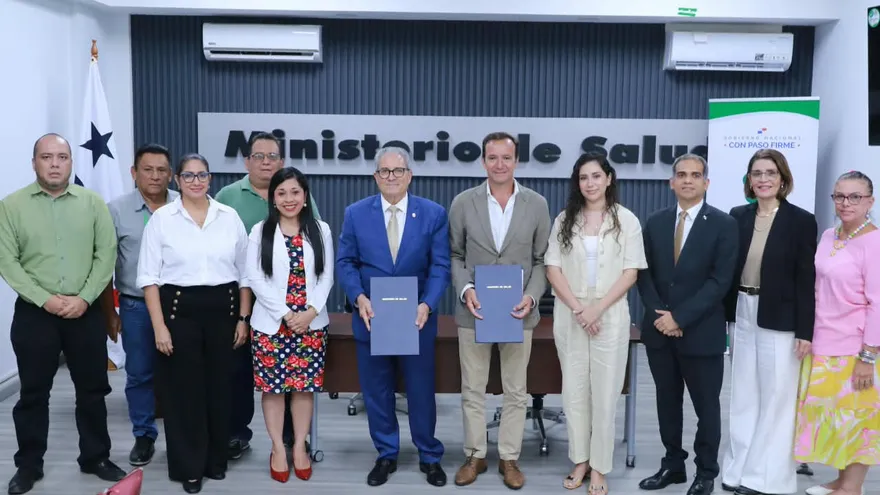

Colón performs historic first brain tumor surgery at Hospital Manuel Amador Guerrero
Translated from Spanish and summarized by DistantNews. Read the original for the full story.
At a glance
News
Named sources
Context piece
- The Hospital Manuel Amador Guerrero in Colón, Panama, successfully performed its first-ever craniotomy to remove a brain tumor.
- This complex procedure marks a significant advancement in neurosurgical care for the Colón province, previously requiring patients to travel to the capital for such treatments.
- The patient is stable and recovering well, with tumor samples sent for analysis to determine a definitive diagnosis.
A groundbreaking medical milestone has been achieved at the Hospital Manuel Amador Guerrero in Colón, Panama, with the successful completion of the province's first-ever craniotomy for the removal of a brain tumor. This complex surgery, performed on a patient over 50 years old who presented with seizures, signifies a major leap forward in providing advanced neurosurgical care directly within the Colón region. Previously, patients requiring such specialized interventions had to undertake arduous journeys to the capital city, Panama City, for treatment.
It means that Colón is moving towards highly specialized procedures, which previously forced patients to be transferred to the capital. Today, they are beginning to be performed locally, with trained human talent, institutional commitment, and equipment prepared to save lives.
The successful operation not only offers a new beacon of hope for patients in Colón but also underscores the strengthening of Panama's public health infrastructure. Dino Mon, the Director General of the Social Security Fund, highlighted the significance of this achievement, stating that it demonstrates Colón's progress towards highly specialized procedures, now being performed locally by a skilled team with institutional commitment and advanced equipment. The patient is currently in stable condition in the intensive care unit, undergoing close monitoring and showing a favorable post-operative recovery.
The patient remains stable in the intensive care unit, under sedation and constant monitoring, while evolving favorably during the postoperative process.
From a Panamanian perspective, this news is particularly resonant. It represents a tangible improvement in healthcare accessibility and quality for a region that has historically faced challenges in accessing specialized medical services. The ability to perform such a high-risk, high-complexity surgery locally reduces patient burden, minimizes delays in treatment, and ultimately saves lives. While international coverage might focus on the medical technicality, local reporting, as seen in TVN Panamá, emphasizes the profound impact on the community – the relief for families, the empowerment of local medical professionals, and the overall advancement of healthcare equity within the country. The neurosurgeon, Héctor Lezcano, noted that the removed tumor samples will undergo pathological analysis for a definitive diagnosis, a crucial step in the patient's ongoing care and recovery.
The samples extracted from the tumor will be analyzed by pathology to determine the type of cells and establish a definitive diagnosis.
About this summary
Originally published by TVN Panamá in Spanish. Translated, summarized, and contextualized automatically by DistantNews, with a note on how the source frames the story. Not individually reviewed before publishing. How this works.
More Stories

From Our Blog

News in Translation: What Gets Lost, and How We Keep the Framing

Diaspora Media: How Communities Abroad Follow Home

Traveling Where the Press Is Not Free: How to Read the News There

The Digital Nomad's Guide to Local News

The Same Story, Different Countries: How Coverage Changes at the Border
