

Commentary: Will Cuba be the US’ Next Misadventure?
Translated from English, summarized and contextualized by DistantNews.
TLDR
- President Trump may consider an intervention in Cuba, seeing it as a potential "easy win" amid Middle East entanglements.
- Cuba faces severe economic hardship due to US sanctions, Venezuelan oil cutoff, and internal mismanagement, leading to widespread hunger and blackouts.
- An intervention could be popular domestically and potentially welcomed by a population desperate for change, though risks of unexpected resistance and damage to US moral authority exist.
From London, Max Hastings offers a stark warning in Bloomberg Opinion: the Trump administration, bogged down in the Middle East, might be eyeing Cuba as its next foreign policy gamble. The narrative paints a picture of a US president tempted by the prospect of a swift, popular victory, a stark contrast to the quagmire in Iran. This potential intervention is framed not just as a geopolitical move, but as a calculated political play, potentially boosting Republican prospects in upcoming midterms.
America’s armed forces are heavily committed in the Middle East, but there are whispers around the White House that they have been warned to stand by for a new intervention against Cuba.
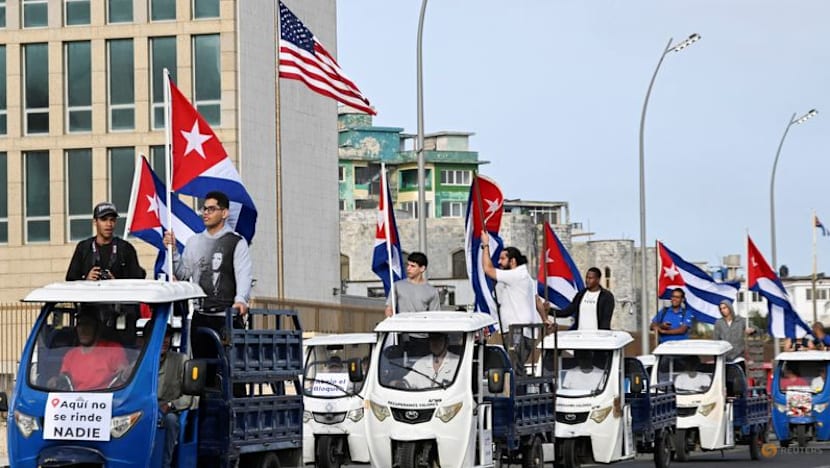
The article vividly describes Cuba's dire straits: a population fleeing in droves, an economy in ruins, and routine blackouts. The Castro regime is portrayed as teetering under the combined pressure of US sanctions, the loss of Venezuelan oil, and its own alleged incompetence. This depiction suggests a country ripe for change, where the population, desperate for relief, might even welcome American forces as liberators. The potential for triumphant photo opportunities for President Trump is explicitly mentioned, highlighting the allure of such a scenario for the White House.
Stepping down is not part of our vocabulary.
However, Hastings injects a note of caution, questioning the wisdom of such a move. He points out that the Trump administration's recent global actions have eroded its moral standing, potentially undermining any claims of liberating Cuba. Furthermore, while the regime's vulnerability is evident, the possibility of unexpected resistance, however unlikely, cannot be entirely dismissed. The commentary implicitly critiques the transactional nature of US foreign policy under Trump, where interventions are weighed against domestic political gains rather than solely on strategic or humanitarian grounds.
Here is one of the few destinations on earth where, once American forces have secured the island, if he himself visits he is likely to receive a riotous welcome as the people’s deliverer.
This perspective, originating from a UK-based commentary, offers a critical lens on potential US actions. It highlights the internal US political calculus driving foreign policy decisions and questions the ethical implications of intervening in a nation already suffering under sanctions. The piece serves as a reminder that while international coverage might focus on geopolitical strategy, the domestic political winds in Washington often play a decisive role in shaping global events, particularly when an "easy win" is perceived to be on the horizon.
The temptation for Trump, mired in a Middle Eastern mess which promises no glory for himself, is that here seems an opportunity for an easy win, which would be popular with many Americans of all parties.
DistantNews Editorial
Originally published by CNA in English. Translated, summarized, and contextualized by our editorial team with added local perspective. Read our editorial standards.
More Stories

From Our Blog

What Gets Lost (and Found) When News Is Translated

The Critical Role of Diaspora Media in Global News

What Travellers Should Know About Countries with Restricted Press

A Digital Nomad's Guide to Following Local News

How the Same Story Looks Different in Different Countries
